

Key takeaways
- Five years after graduating, the median engineering graduate earned £44,300 in the 2023-24 tax year, against £33,300 for all first-degree graduates of English universities (DfE LEO).
- Engineering and technology roles made up about 19% of all UK jobs in 2025 — some 6.3 million people — yet women held just 17% of them (EngineeringUK).
- In 2024/25 there were 60,350 degree-level (Level 6 and 7) apprenticeship starts in England, 17.1% of all starts, and 29% of all starts were in engineering and technology-related subjects.
- Engineering is more open by class than many professions: 21% of engineering professionals come from lower socio-economic backgrounds, compared with 6% of doctors and 13% of legal professionals (Sutton Trust / Bridge Group, 2022).
- The ASPIRES studies found that a 17–18 year old with high science capital was roughly six times more likely to pursue a physics degree than peers with medium or low science capital — and that science capital is built through sustained contact, not one-off events.
STEM matters for young refugees for three reasons that the evidence supports plainly. It leads to work that UK employers struggle to fill. It pays: five years after graduating, the median engineering graduate earned £44,300 in the 2023-24 tax year, a third more than the all-subject median. And it is more open to people from less advantaged backgrounds than many other professions.
There is a fourth reason that is harder to put in a table. Mathematics and science are written partly in symbols that do not change at a border. A young person who learned algebra in Kabul, Khartoum or Aleppo still knows algebra in London. That does not remove the need for academic English — far from it — but it does mean that prior learning can carry across in STEM more directly than in almost any other subject.
This article sets out what the numbers actually say, and where they are more complicated than a careers poster suggests. It covers skills demand, graduate earnings by subject, social mobility, who is missing from STEM, why language is both an advantage and a barrier, the routes in after 16, and the research on “science capital”. It ends with practical next steps for students and for employers.
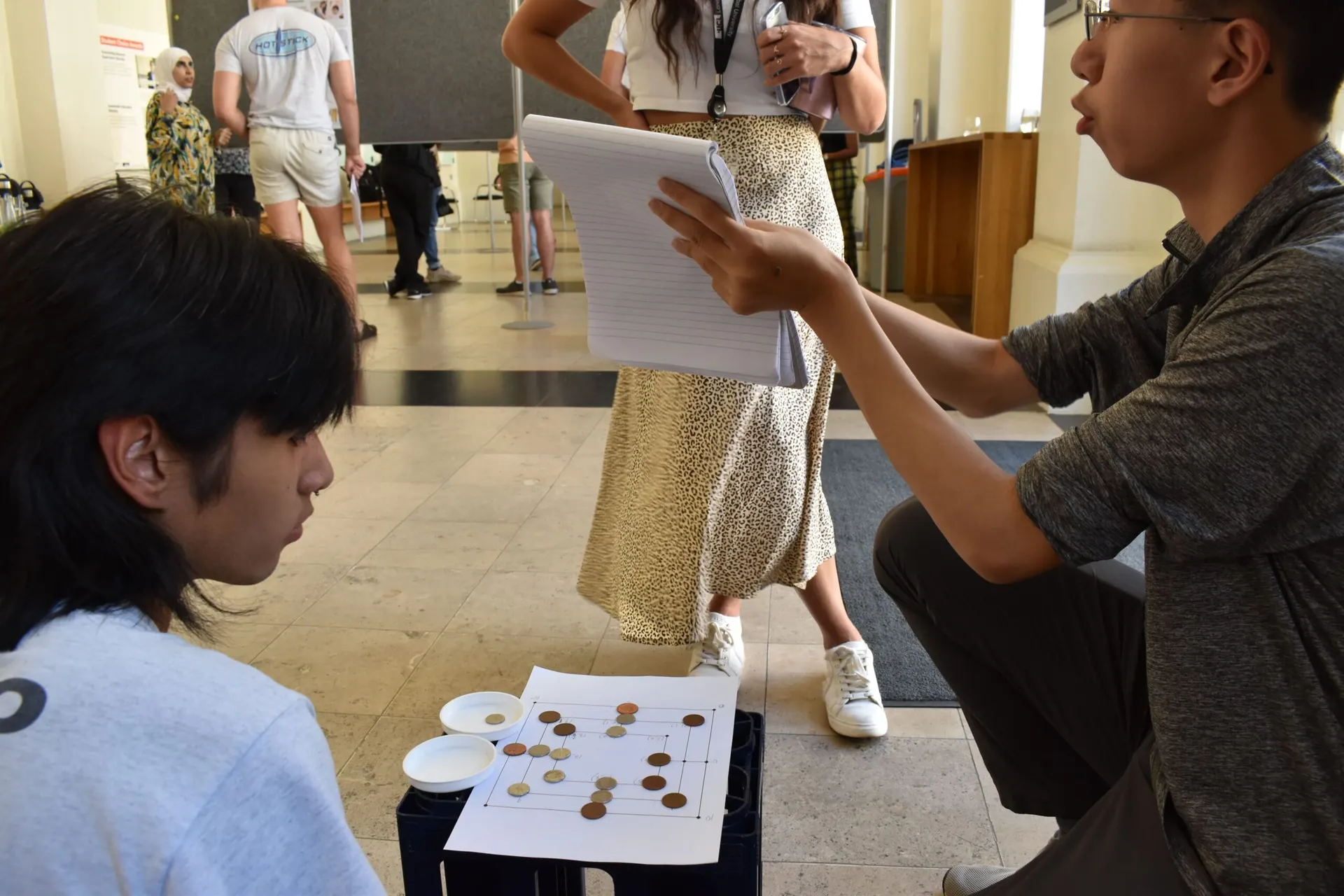
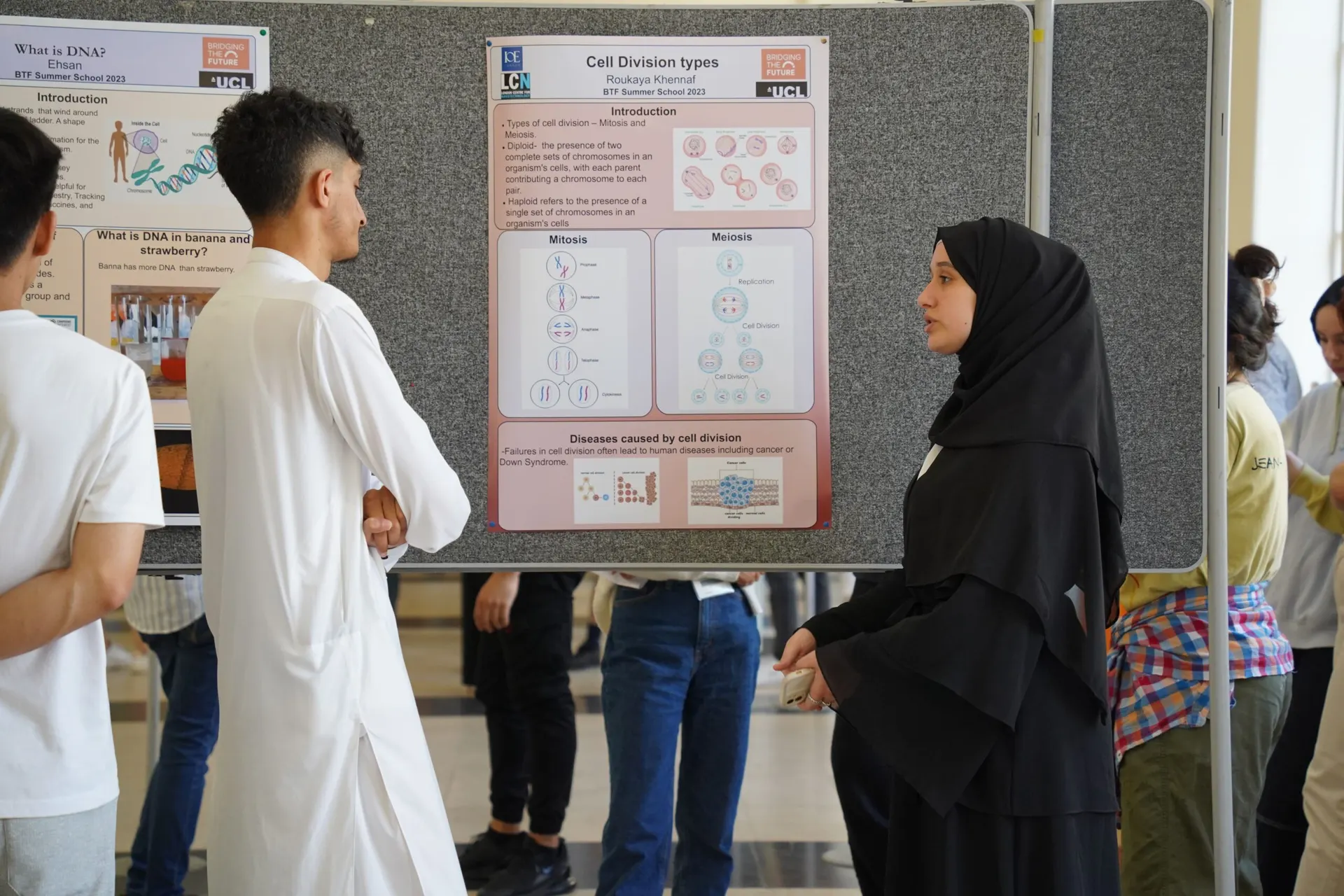
We write as a charity that runs a free STEM and English summer school at UCL and a free online mentoring programme for 16–22 year olds from refugee, asylum-seeking and forced-migrant backgrounds. We have a view. We have tried to keep it separate from the evidence.
- median earnings of engineering graduates five years after graduating
- £44,300median earnings of engineering graduates five years after graduating2023-24 tax year. The median across all subjects was £33,300
- of all UK jobs are engineering and technology roles
- 19%of all UK jobs are engineering and technology roles6.3 million people in 2025 — but only 17% of them are women
- degree-level apprenticeship starts in England in 2024/25
- 60,350degree-level apprenticeship starts in England in 2024/25Level 6 and 7, up from 50,110 the year before
Source: DfE Graduate labour market outcomes (LEO) 2023-24; EngineeringUK 2026; DfE Apprenticeships 2024/25
Is there really a STEM skills shortage in the UK?
Yes, but it is more specific than the headlines, and it is worth understanding its shape before building a life plan on it.
Start with scale. EngineeringUK’s latest analysis of Labour Force Survey data, published in April 2026, finds that 6.3 million people work in engineering and technology roles — about a fifth (19%) of all UK jobs in 2025. A further 10% of roles sit inside the sector without being engineering or technology jobs themselves. This is not a niche. It is one job in five.
Then look at where employers struggle. The Department for Education’s Employer Skills Survey 2024, a survey of more than 22,000 UK employers, counted 250,500 skill-shortage vacancies in 2024 — vacancies that are hard to fill because applicants lack the skills, qualifications or experience required. That was 27% of all vacancies.
The pattern by sector and occupation is revealing:
- Construction had the highest skill-shortage density of any sector: 45% of its vacancies.
- Manufacturing and the primary sector and utilities were each at 34%.
- By occupation, skilled trades were hardest to fill, at 48% of vacancies, and professional occupations — which include engineers and scientists — were at 29%.
There is an important counterweight. In information and communications, the skill-shortage density fell sharply, from 43% in 2022 to 17% in 2024. Digital skills are still in demand, but the idea that anyone who learns to code walks into a job is not what the 2024 data shows.
What do STEM graduates earn?
The best UK source on this is the Department for Education’s Longitudinal Education Outcomes (LEO) data, which links student records to tax records. The latest release, published on 25 June 2026, covers the 2023-24 tax year. It follows UK-domiciled students who graduated with a first degree from English higher education providers in 2017-18, and reports what they earned five years later.
Across all subjects, the median was £33,300. By subject, the spread is wide.
Median earnings five years after graduation, by subject
UK-domiciled first-degree graduates of English providers who graduated in 2017-18, earnings in the 2023-24 tax year
- Medicine and dentistry£56,400
- Economics£51,200
- Engineering£44,300
- Mathematical sciences£43,900
- Physics and astronomy£43,600
- Pharmacology, toxicology and pharmacy£42,200
- Computing£39,900
- Chemistry£38,100
- Nursing and midwifery£37,300
- All subjects£33,300
The median across every first-degree subject
- Biosciences£32,900
- Psychology£29,600
- Creative arts and design£27,100
- Performing arts£25,600
Show the data as a table
| Category | Value |
|---|---|
| Medicine and dentistry | £56,400 |
| Economics | £51,200 |
| Engineering | £44,300 |
| Mathematical sciences | £43,900 |
| Physics and astronomy | £43,600 |
| Pharmacology, toxicology and pharmacy | £42,200 |
| Computing | £39,900 |
| Chemistry | £38,100 |
| Nursing and midwifery | £37,300 |
| All subjects | £33,300 |
| Biosciences | £32,900 |
| Psychology | £29,600 |
| Creative arts and design | £27,100 |
| Performing arts | £25,600 |
Three things stand out.
The physical sciences, maths and engineering cluster together, well above the median. Engineering (£44,300), mathematical sciences (£43,900) and physics and astronomy (£43,600) are each around £10,000–£11,000 above the all-subject figure. Put simply, the median engineering graduate earned about a third more than the median graduate overall.
STEM is not uniform. Biosciences graduates had median earnings of £32,900, slightly below the all-subject median. A student choosing between biology and chemistry is not choosing between “STEM” and “not STEM”; they are choosing between two different labour markets.
The median hides a lot of variation. The quartiles show how far outcomes spread within a single subject.
| Subject (first degree) | Lower quartile | Median | Upper quartile | Graduates in the earnings figures |
|---|---|---|---|---|
| Engineering | £34,800 | £44,300 | £55,600 | 10,600 |
| Mathematical sciences | £32,900 | £43,900 | £60,400 | 4,385 |
| Physics and astronomy | £33,700 | £43,600 | £57,800 | 2,040 |
| Computing | £28,900 | £39,900 | £56,000 | 9,470 |
| Architecture, building and planning | £29,300 | £39,200 | £53,800 | 3,395 |
| Chemistry | £31,100 | £38,100 | £50,400 | 2,435 |
| Nursing and midwifery | £28,500 | £37,300 | £44,700 | 14,325 |
| Biosciences | £26,000 | £32,900 | £42,100 | 6,915 |
| All subjects | £25,300 | £33,300 | £44,300 | 218,625 |
Source: DfE LEO, tax year 2023-24, UK-domiciled first-degree graduates of English higher education providers, five years after graduation.
Notice that the lower quartile for engineering, £34,800, is above the median for all subjects. In other words, three in four engineering graduates earned more than the typical graduate. Computing, by contrast, runs from £28,900 at the lower quartile to £56,000 at the upper — a wide spread that reflects very different kinds of jobs under one subject name.
The caveat that matters most
Earnings by subject partly reflect who studies each subject. Students who take maths or physics tend to arrive with high prior attainment, and some of their later earnings would have followed them whatever they studied.
The LEO release tries to account for this. Comparing people of the same sex with similar GCSE attainment, it finds that in the 2023-24 tax year, ten years after their GCSEs, female STEM graduates earned between £8,700 and £12,800 more than women with no higher-level qualification, and male STEM graduates between £2,900 and £7,700 more than comparable men, depending on GCSE attainment. That is a fairer comparison, and the gains are still real.
Is STEM a route to social mobility?
Social mobility is about whether where you start determines where you end up. For young people who have lost their home, their schooling and often their family’s networks, it is not an abstract question.
Two findings point in opposite directions, and both are true.
The first is encouraging. A 2022 report for the Sutton Trust by the Bridge Group, Bridging the Gap, drew on Labour Force Survey analysis originally carried out for the Social Mobility Commission. It found that engineering is considerably more open by socio-economic background than most comparable professions.
Professionals from lower socio-economic backgrounds, by occupation
Share of people in each professional group who grew up in a lower socio-economic background, UK, Labour Force Survey 2017 data
- Whole workforce29%
The benchmark for the wider labour market
- Engineering professionals21%
- Accountants17%
- Management consultants15%
- Legal professionals13%
- Journalists12%
- Doctors6%
Show the data as a table
| Category | Value |
|---|---|
| Whole workforce | 29% |
| Engineering professionals | 21% |
| Accountants | 17% |
| Management consultants | 15% |
| Legal professionals | 13% |
| Journalists | 12% |
| Doctors | 6% |
The report suggests a reason. Because engineering is a relatively technical field, performance can be assessed against more neutral measures of ability and effort, whereas in professions such as law or accountancy more weight falls on “polish”, “confidence” and “gravitas”, which map to social class. The class pay gap it reports for engineering professionals, £2,483 a year after controlling for education, location, gender and ethnicity, is smaller than for doctors (£6,996) or IT professionals (£3,973).
The second finding is a warning. The same report found that within engineering, 71% of people in their thirties from higher socio-economic backgrounds were in managerial or professional roles, compared with 39% of those from lower backgrounds. It describes a “two-tier” system in which students from less advantaged backgrounds are more likely to take vocational routes with fewer chances to progress. Getting in is easier than in law. Getting on is still unequal.
The DfE’s LEO data shows the same gradient among graduates. Among those who started their degree under 21, graduates from the most deprived areas had median earnings £3,400 lower five years after graduation than graduates from the least deprived areas, and were 5.3 percentage points less likely to be in sustained employment or further study.
For a young refugee, the practical lesson is double-edged. STEM is a comparatively open door. But the people who progress fastest once inside tend to have networks, early advice and informal sponsorship — exactly what displacement strips away. That is why mentoring and work experience matter as much as the qualification.
Who is missing from STEM?
If STEM careers are well paid and in demand, it matters who gets them. The data shows clear gaps.
Who works in engineering and technology roles
Share of workers in engineering and technology roles compared with all other roles, UK, 2025
- Engineering and technology roles
- All other roles
- Women17%vs 56%
- UK minority ethnic backgrounds15%vs 18%
- Disabled people14%vs 18%
Show the data as a table
| Category | Engineering and technology roles | All other roles |
|---|---|---|
| Women | 17% | 56% |
| UK minority ethnic backgrounds | 15% | 18% |
| Disabled people | 14% | 18% |
Gender. WISE’s workforce data for December 2024 found women made up 27.6% of the core STEM workforce — over 1.4 million women, an all-time high — against 47.8% of the workforce overall. In some roles the gap is much wider: women were 10.6% of engineering professionals and 20.2% of IT professionals. The ASPIRES research found that from the age of 10, girls were four times less likely than boys to aspire to engineering careers.
Ethnicity. UK minority ethnic groups make up 15% of engineering and technology workers against 18% in other roles, according to EngineeringUK. The picture varies by group. ASPIRES found that Black students had relatively high science aspirations and confidence at school, yet this did not translate into proportionate participation in post-16 science or the science workforce — a gap the researchers call the “science debt”. South Asian students, by contrast, were over-represented among those with high science capital.
Disadvantage. The ASPIRES 2 survey of Year 11 students found that only 22% of those from the least advantaged backgrounds studied triple science at GCSE, compared with 71% from the most advantaged. Triple science is a common stepping stone to science A levels, and the researchers found that most students did not have a real choice about which science route they took.
Refugee status is not recorded in any of these datasets, so there is no national figure for how many young refugees go on to STEM study or careers. What we can say is that a young person from a refugee background frequently sits in several under-represented groups at once — and, if they arrived at 15 or 16, may never have had the chance to be placed on a triple science route at all.
Why can STEM be more accessible for students still learning English?
This is the part of the argument we hear most often from students themselves, and it needs to be made carefully.
What travels
A quadratic equation looks the same in every school system. So does the periodic table, a circuit diagram, a balanced chemical equation, a graph of velocity against time, and a line of Python. A student who reached a good level in maths or physics before displacement often keeps that knowledge, even when they cannot yet explain it fluently in English.
That has three practical consequences:
- Ability is easier to see. A teacher or mentor can set a problem with minimal language and quickly see what a student can do. In an essay-based subject, weak English can hide strong understanding for a long time.
- Progress can be faster. A student who already understands the concept is learning vocabulary for something they know, not a concept and a language at once.
- Prior learning can be evidenced. Worked problems and test scores are a form of evidence that does not depend on a certificate from a school that may no longer exist. For formal recognition of overseas qualifications, UK ENIC is the national agency; our guide to getting overseas qualifications recognised explains what to do when documents are missing.
What does not travel
None of this means STEM can be done without English. Scientific English is a register of its own. Words such as yield, solution, resistance and displacement have everyday meanings that mislead in a science exam. Exam questions ask students to “explain”, “evaluate” or “suggest”, and each command word expects a different kind of answer. University applications ask for personal statements, and interviews ask students to talk through their reasoning aloud.
We have written at length about how this gap catches young people who arrive at 15 or 16 in the GCSE vacuum. General ESOL courses teach the English of daily life, which is valuable, but it is not the English of a physics paper. Our guide to ESOL for 16–19 year olds looks at how to combine the two.
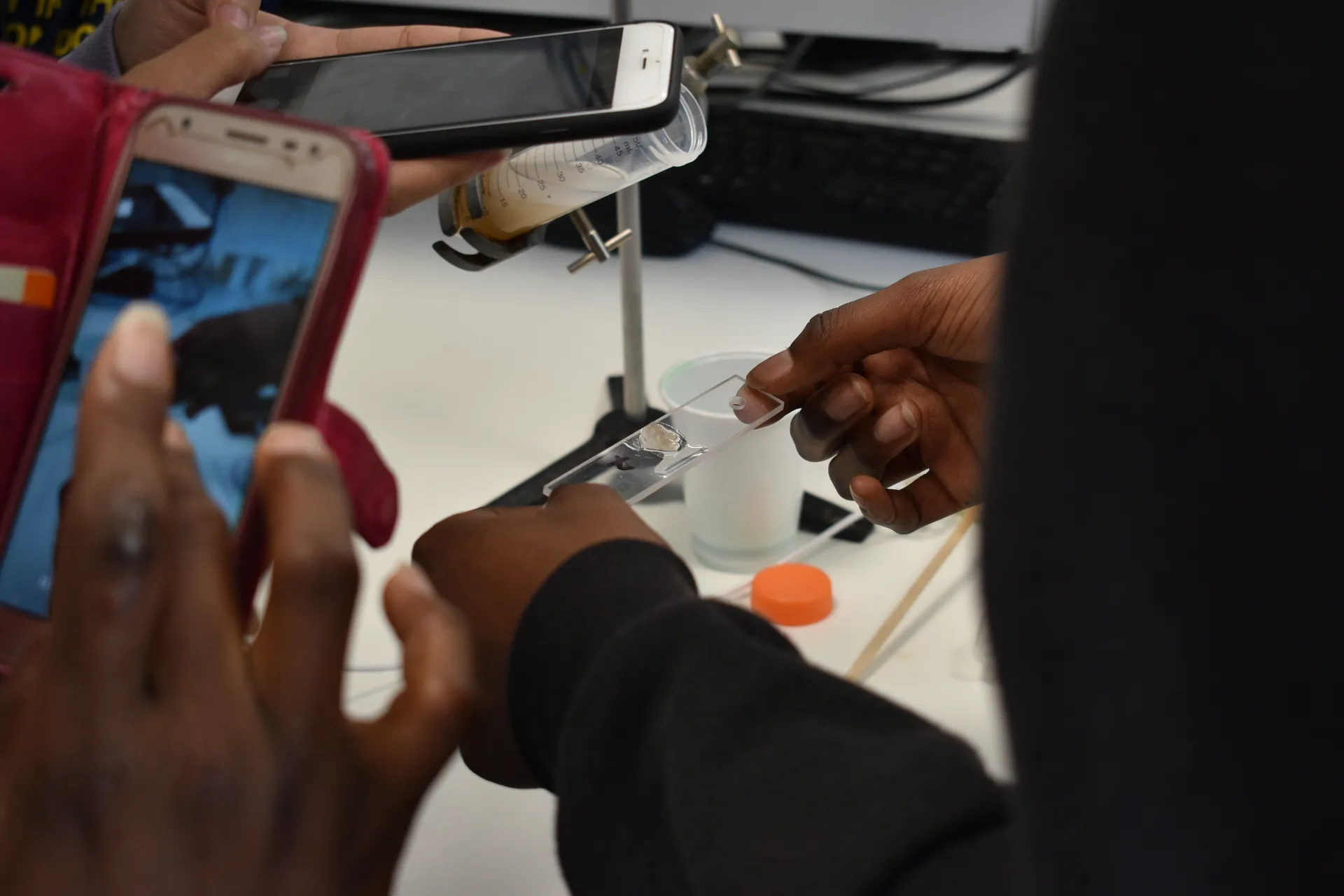
The honest summary is that STEM lowers the language barrier at the start and raises it again at the point of qualification. Students who plan for both stages do best.
An illustrative example
This is a composite, built from patterns common among young people in similar situations. It does not describe a real person.
A 17-year-old arrives having completed most of secondary school at home, with strong maths and chemistry. At an English college she is placed on an ESOL course because she has no GCSEs. Within a few weeks her tutor notices she finishes the maths worksheets first.
In STEM terms, she is closer to university than her paperwork suggests. What she lacks is a recognised Level 2 qualification in English and maths, the academic vocabulary for chemistry, evidence of her prior learning, and someone who knows the routes. Each of those is fixable: some colleges offer GCSE maths to post-16 students; a statement of comparability can document her schooling; a foundation year or an Access to HE Diploma can bridge to a degree; and a mentor can explain all of this in an hour. Without those pieces, the most likely outcome is another year of general ESOL.
What are the STEM routes after 16?
There is more than one way into STEM, and the right one depends on age, prior learning, English level and — critically — immigration status.
| Route | Typical length | Level | Entry and eligibility | Good to know |
|---|---|---|---|---|
| A levels (e.g. maths, physics, chemistry, biology) | 2 years | Level 3 | Set by each sixth form or college; science and maths A levels often ask for high GCSE grades in those subjects | The most common route to a STEM degree |
| T Levels (e.g. engineering, science, digital, healthcare science) | 2 years | Level 3, broadly equivalent in size to 3 A levels | Taken after GCSEs, usually from 16 | Include an industry placement of at least 315 hours (about 45 days); a Distinction* carries 168 UCAS points |
| Access to HE Diploma | Usually 1 year full time, or 2+ years part time | Level 3 | Designed for people without traditional qualifications; age and entry rules vary by college | 60 credits, 45 of them graded at Level 3; widely accepted by universities |
| Foundation or preparatory year | 1 year | Leads into a degree | Set by each university; often designed for students without standard UK qualifications | Some universities attach sanctuary scholarships |
| Apprenticeship (intermediate to advanced) | From 8 months | Levels 2–3 | 16 or over, not in full-time education, and the right to work in the UK | Paid job, with at least 20% of working hours for off-the-job training |
| Higher and degree apprenticeship | Often several years; up to 6 | Levels 4–7 (degree apprenticeships are Level 6 or 7) | As above, with employer entry requirements | A paid job leading to a qualification at bachelor’s or master’s level |
Sources: DfE, Introduction of T Levels (updated January 2026); GOV.UK, How apprenticeships work; QAA-licensed Access to HE Diploma. Apprenticeships can take from 8 months to 6 years depending on type and level. Entry requirements for A levels, foundation years and apprenticeships are set by each provider or employer.
For a closer look at the bridging options, see our guide to Access to HE Diplomas and foundation years. For how fee status affects the university routes, see home fees and student finance for refugees and asylum seekers.
Apprenticeships: the numbers
Apprenticeships in STEM have grown, and they have moved up the levels. According to the DfE’s final figures for 2024/25, published in November 2025:
- There were 353,500 apprenticeship starts in England, up 4.1% on the year before.
- Higher apprenticeships (Levels 4–7) rose 15.1% to 140,730, nearly 40% of all starts.
- Degree-level apprenticeships (Levels 6 and 7) rose from 50,110 to 60,350, 17.1% of all starts.
- There were 46,070 starts in engineering and manufacturing technologies, and starts on the digital route more than doubled from 14,760 in 2020/21 to 31,410.
- Under-19s accounted for 21.2% of starts (74,990).
EngineeringUK’s analysis of the same year found that 29% of all starts — 102,280 — were in engineering and technology-related subjects, up 5%. Female starts made up 20% of these, and in 2023/24, 16% were by people from UK minority ethnic backgrounds.
One policy change matters for younger applicants: from January 2026, Level 7 apprenticeships are government-funded only for people aged 16 to 21, and for care leavers or those with an Education, Health and Care Plan who are under 25 when they start. Care leavers include many young people who arrived in the UK as unaccompanied children.
What is science capital, and how is it built?
The most useful research for anyone designing STEM support is the ASPIRES programme. It began at King’s College London, moved to the UCL Institute of Education in 2017, and tracked a cohort of young people in England from age 10 to 19. Over ten years the team carried out more than 40,000 surveys and 660 interviews. The ASPIRES 2 report was published in 2020.
Its central idea is science capital: all the science-related interests, attitudes, resources, behaviours and social contacts a person has. Knowing someone who works in science. Talking about science at home. Visiting a laboratory. Seeing science as something “people like me” do.
The findings that matter most here:
- Interest is not the problem. Most young people found science interesting, but only around 16% of those aged 10–18 said they would like to become a scientist. Around 26% aspired to engineering between the ages of 10 and 16.
- Science capital predicts who continues. At 17–18, a student with high science capital was roughly six times more likely to pursue a physics degree, and two and a half times more likely to aspire to an engineering degree, than peers with medium or low science capital.
- It is unequally distributed. Students from under-served communities were over-represented among those with low science capital.
- One-off inspiration is not enough. The researchers recommend moving away from single-experience initiatives towards “longer term, regular partnership work”, focused on under-represented communities, and valuing young people’s own knowledge and interests.
- Careers support is patchy. Less than two-thirds (63%) of students aged 15–16 reported having received careers education.
A young refugee is likely to have lost much of their science capital along with everything else: the teacher who knew them, the relative who was an engineer, the familiarity of the classroom. The good news in the research is that science capital is not fixed. It is built — and it can be rebuilt.
| What builds science capital | What the ASPIRES evidence says | What Bridging the Future does |
|---|---|---|
| Sustained contact over time, not a single event | Researchers recommend long-term, regular partnership work rather than one-off initiatives | Pairs a two-week summer school in August with online mentoring that runs weekly from October to March |
| Knowing people who work or study in STEM | Social contacts are a core part of science capital | Volunteer-led: students work with volunteer mentors every week in STEM, IT and English |
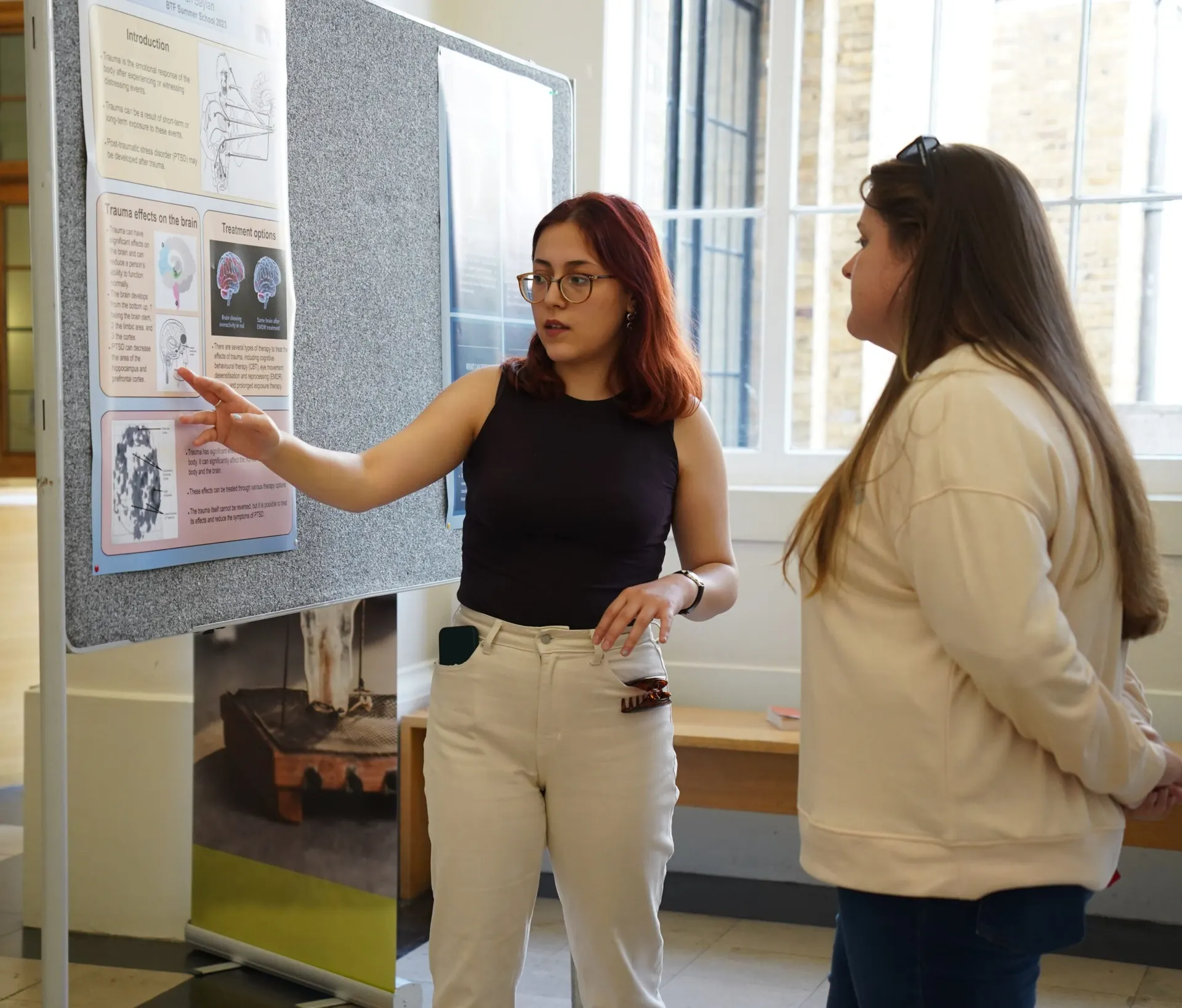
| Being in real science spaces | Families with high science capital give children extensive science-related resources and experiences | Teaches the summer school inside the UCL Department of Physics & Astronomy |
| Recognition of existing knowledge | The research urges practice that values students’ identities, knowledge and interests | Our students have come from 23 countries and bring learning from many different school systems |
| Good careers information | Only 63% of 15–16 year olds reported receiving careers education | Mentoring covers CVs, personal statements, university applications and mock interviews |
| Focus on under-represented groups | Efforts and resources should focus on under-represented communities | Free places for 16–22 year olds from refugee, asylum-seeking and forced-migrant backgrounds, with travel (TfL Zones 1–6), food and materials covered |
| Contact with the world of work | Careers support was unevenly spread, and students who received it were more satisfied | Our new work placements and internships programme connects students with employers |
Demand for this kind of sustained support is high. In 2025, our summer school received 315 applications for 30 places. Since 2022, our online mentoring has supported 32 students through more than 250 hours of volunteer mentoring. Those are small numbers against a national gap, and we do not claim otherwise.
What should young refugees interested in STEM do next?
The right next step depends on age and status. The table below is an orientation, not advice on any individual case.
| Your situation | STEM steps usually open to you | Check first |
|---|---|---|
| Under 18, in school or college, asylum claim pending | Full-time education; GCSE maths and science where offered; work experience that forms part of your education; volunteering; summer schools and mentoring | Your school or college, your social worker, and our guide to education rights for unaccompanied children |
| 18 or over, asylum claim pending | College courses including ESOL and maths; volunteering; mentoring and summer schools; university only with a scholarship in most cases | Fee status for your course — see home fees and student finance; permission to work is restricted |
| Refugee status or humanitarian protection | All of the above, plus apprenticeships, T Levels and student finance subject to eligibility rules | Student Finance England and your college or university |
| Care leaver (including former unaccompanied children) | Apprenticeships if you have the right to work, with Level 7 funding available if you are under 25 when you start | Your personal adviser and local authority leaving care team |
| Studied STEM before arriving | Get prior learning recognised; ask about fast-track GCSE maths, Access to HE or a foundation year | UK ENIC and university admissions teams |
Whatever your situation, five actions help almost everyone:
- Keep your maths going. Maths is the gate to nearly every STEM route, from T Levels to engineering degrees. If you are on an ESOL course, ask whether you can study maths alongside it.
- Learn the science vocabulary deliberately. Keep a list of subject words and exam command words in English and your first language.
- Collect evidence of what you know. Keep any school records, certificates, test results and even photographs of old exercise books. See our guide to qualifications recognition.
- Find one person who knows the routes. A mentor, teacher or careers adviser who understands UCAS, apprenticeships and foundation years can save you a year. That is what our volunteer mentors do.
- Get inside real STEM spaces. Summer schools, lab visits, clubs and work experience build confidence and give you something concrete for a personal statement or CV. Read what happens inside our free STEM summer school.
What can employers do?
Employers keep telling the Employer Skills Survey that technical roles are hard to fill. EngineeringUK’s data shows the workforce is still narrow in who it draws on. Young people from refugee backgrounds are one of the least tapped sources of motivated, often multilingual, STEM talent — and the barriers they face are, to a surprising extent, within an employer’s power to lower.
The evidence points to a handful of practical steps:
- Offer work experience and placements. The Sutton Trust report found that networks and informal sponsorship shape who progresses in engineering, and ASPIRES found careers encounters are unevenly spread. A one- or two-week placement gives a young person a reference, a network and a line on their CV that no qualification provides. Home Office guidance confirms that children in the asylum system can take part in work experience placements or training that form part of their education.
- Recognise learning from elsewhere. Where a role asks for GCSEs or A levels, consider whether an overseas qualification, a UK ENIC statement or a practical assessment could show the same thing.
- Look again at language requirements. Ask whether a role needs fluent written English on day one, or whether technical ability plus support would do.
- Open apprenticeships to refugees. People with refugee status or humanitarian protection can usually be funded for apprenticeships straight away. Make sure your recruitment team knows this.
- Volunteer your people. An hour a week of mentoring from October to March is a small commitment for an engineer or scientist, and it builds exactly the science capital that the research says matters. Find out more about volunteering with us.
What the evidence does not tell us
It would be easy to overstate the case, so here is what we cannot say.
There is no national data on how many young refugees study STEM, enter STEM apprenticeships or work in STEM jobs, because refugee status is not recorded in education or labour market statistics. The earnings figures describe graduates of 2017-18, most of whom did not face displacement, language barriers or disrupted schooling. Shortages move with the economy, as the fall in digital skill-shortage vacancies shows. And a well-paid subject is only a good choice for a young person who wants to study it.
What the evidence does support is narrower and still important. STEM skills are in persistent demand. STEM qualifications carry a real earnings premium. Engineering in particular is more open by class than many professions. And the thing that most separates young people who continue in science from those who do not is not interest or ability, but sustained access to people, places and information — which is something the rest of us can provide.
Figures compiled in September 2026 from the sources listed below. Earnings data is for the 2023-24 tax year; apprenticeship data is for the 2024/25 academic year. Rules on immigration status, fees and apprenticeship funding change, and this article is general information, not legal or immigration advice. If you spot something out of date, please tell us.
Keep reading
- The GCSE vacuum — why displaced 16-year-olds fall through UK education, and why academic English is a barrier of its own.
- From 1% to 15% — refugees in higher education and the global 15by30 target.
- Access to HE Diplomas and foundation years — the bridging routes into a degree for students without UK qualifications.
- Work placements and internships — our programme connecting young people with STEM employers.
Frequently asked questions
Why is STEM a good choice for young refugees in the UK?
STEM subjects lead to jobs employers find hard to fill and, on average, to higher earnings: in the 2023-24 tax year, engineering, maths and physics graduates had median earnings of £43,600 to £44,300 five years after graduating, against £33,300 across all subjects. Maths and science also rely heavily on symbols and notation, so prior learning can carry across languages, although academic English still matters for exams and applications.
Can an asylum seeker do an apprenticeship in England?
Generally no. An apprenticeship is a paid job, and people seeking asylum do not usually have permission to work. Those waiting more than 12 months may apply for permission, but it is restricted to a narrow list of skilled jobs. People with refugee status or humanitarian protection can usually be funded straight away. Rules change, so check GOV.UK and the NRPF Network, and take specialist advice on an individual case.
What is science capital?
Science capital is a term from the ASPIRES research, begun at King's College London, for all the science-related interests, attitudes, resources, behaviours and social contacts a young person has — for example, knowing someone who works in science or talking about science at home. The research found higher science capital was strongly linked to taking science after 16 and aspiring to science or engineering degrees.
Do STEM graduates always earn more?
No. STEM is not one thing. In the DfE’s LEO data for the 2023-24 tax year, median earnings five years after graduation were £44,300 for engineering but £32,900 for biosciences, slightly below the £33,300 all-subject median. Earnings also vary widely within a subject, and the figures reflect who studies each subject as well as the subject itself, so they are a guide rather than a promise.
What STEM routes are there after 16 if you have no GCSEs?
Options include GCSE English and maths alongside ESOL at college, T Levels, Access to HE Diplomas for people without traditional qualifications, and university foundation or preparatory years. Apprenticeships are open from 16 to people with the right to work. Which route fits depends on age, immigration status and prior learning. See our guides to Access to HE and foundation years and ESOL for 16–19 year olds.
How can employers support young refugees into STEM careers?
Employers can offer work experience, placements, mentoring and workplace visits, adapt recruitment so that overseas learning is recognised, and support apprenticeships for young people with the right to work. Under-18s in the asylum system can take part in work experience that forms part of their education. Bridging the Future runs a work placements and internships programme and welcomes employer partners.
Sources & further reading
Every third-party figure quoted above links back to its primary source. Where a statistic is our own, it comes from our programme records.
- Graduate labour market outcomes (LEO), tax year 2023-24, Department for Education, GOV.UK (2026)
- How many people in the UK work in engineering and technology? (Engineering and technology workforce), EngineeringUK (2026)
- Apprenticeship pathways into engineering 2024/25, EngineeringUK (2025)
- Employer Skills Survey, calendar year 2024, Department for Education, GOV.UK (2025)
- Apprenticeships, academic year 2024/25, Department for Education, GOV.UK (2025)
- Workforce data – December 2024, WISE (2025)
- Bridging the Gap: socio-economic diversity in the engineering sector — access, pay and progression, The Sutton Trust and the Bridge Group (2022)
- ASPIRES 2: Young people’s science and career aspirations, age 10–19, UCL Institute of Education (study begun at King’s College London) (2020)
- Introduction of T Levels, Department for Education, GOV.UK (2026)
- Become an apprentice: how apprenticeships work, GOV.UK
- About the Diploma, Access to HE (QAA)
- Permission to work and volunteering for asylum seekers, Home Office, GOV.UK (2026)
- Apprenticeships — rights and entitlements, NRPF Network (2026)
- Bridging the Future programme records, 2018–2026, Bridging the Future
Spotted something out of date, or have a figure we should include? Write to contact@bridgingthefuture.org and we will correct it.