
Key takeaways
- A sanctuary scholarship is university-run funding, usually a tuition fee waiver plus a living-cost payment, for people who have sought asylum in the UK and cannot get government student finance because of their immigration status.
- STAR (Student Action for Refugees) says over 80 UK universities offer scholarships, bursaries or fee waivers for people who have claimed asylum, but individual schemes are small: for 2026/27 entry Bath offered 1 undergraduate award, UCL and Edinburgh 2 each, Warwick 4 and Glasgow 19.
- For the undergraduate schemes we checked, 2026/27 sanctuary scholarship deadlines fell between 20 April and 3 July 2026, after the January UCAS deadline, but almost every scheme requires you to have applied to, or hold an offer from, the university first.
- Living-cost support varies widely: for 2026/27 Glasgow paid £5,000 a year, Sheffield £10,300, UCL £14,135 and Edinburgh around £21,000. Of the eight undergraduate schemes compared, only Bath's covers accommodation costs.
- For 2027 entry, the schemes to watch open in autumn 2026: Warwick says its applications open in late October 2026 and Glasgow says its scheme reopens in October, while the UCAS equal consideration deadline is 13 January 2027.
A sanctuary scholarship is a package of funding, offered by an individual UK university, for students who have sought asylum and cannot get government student finance because of their immigration status. The typical award is a full tuition fee waiver plus a yearly payment towards living costs. They are real, they are life-changing for the people who receive them, and there are very few of each.
That last point shapes everything. Student Action for Refugees (STAR) says more than 80 UK universities offer scholarships, bursaries or fee waivers for people who have claimed asylum. But a single university’s scheme might fund one student a year, or two, or four. Finding the right schemes, meeting the conditions and applying on time is most of the work.
This guide is for students, and for the teachers, social workers, foster carers and volunteers who support them. It covers who sanctuary scholarships are for, what they cover and what they leave out, eight real schemes for 2026/27 entry side by side, when applications open and close, where to look, how to write a strong application, and what a supporting adult can do. Every scheme detail below comes from the university’s own page, checked in September 2026.
- UK universities offering scholarships, bursaries or fee waivers for people who have claimed asylum
- 80+UK universities offering scholarships, bursaries or fee waivers for people who have claimed asylumAccording to STAR’s scholarship list, 2026
- Universities first awarded University of Sanctuary status in 2025
- 12Universities first awarded University of Sanctuary status in 2025The busiest year on City of Sanctuary’s published list
- Sanctuary scholarships at Glasgow for 2026/27, the largest scheme we checked
- 19Sanctuary scholarships at Glasgow for 2026/27, the largest scheme we checkedBath offered one undergraduate award; UCL and Edinburgh two each
Source: STAR, City of Sanctuary UK and university scholarship pages, checked September 2026
A word of caution before we start. Scholarship rules, fee status and asylum support all change, and they depend on the details of an individual case. This is general information, not legal or immigration advice: use it to find your way, then confirm with the university and an adviser. Refugee Education UK runs free workshops and offers individual advice to young people, and UKCISA publishes detailed guidance on fee status.
What is a sanctuary scholarship?
The name is not fixed. UCL calls its scheme the Access Opportunity Scholarship. Edinburgh’s is the Asylum Seeker Scholarship. Warwick, Sheffield, Glasgow, Reading, Bath and SOAS all use “Sanctuary Scholarship”. What they share is purpose: they exist because of a gap in the funding system.
That gap is set out plainly by UCAS. People with refugee status or humanitarian protection are usually eligible for home fees. Students seeking asylum, including those awaiting or appealing a Home Office decision, and students with an insecure immigration status are usually charged overseas fees, and eligibility for student finance may be restricted. Scotland is different: UCAS notes that unaccompanied asylum-seeking children, children of asylum seekers and people with limited leave to remain are granted home fees there. Our companion guide to home fees and student finance for refugees and asylum seekers explains the rules in detail.
For a young person with a pending claim in England, that means a degree priced as an international student, no tuition fee loan and no maintenance loan. A sanctuary scholarship is the university stepping into that gap with its own money.
Where the idea came from
Much of the groundwork was laid by Article 26, a project of the Helena Kennedy Foundation that spent around ten years helping universities design scholarships for people seeking sanctuary. According to the Universities of Sanctuary network, Article 26 was incorporated into that network in 2018, and its resources for setting up and running schemes are still published there. The network describes scholarships as one of the main ways a university can put its sanctuary commitment into practice.
That commitment is formalised through the University of Sanctuary award, run by City of Sanctuary UK. It recognises a whole-institution culture of welcome, not just funding, so holding the award does not guarantee a scholarship. But seven of the eight undergraduate schemes compared later in this guide are at universities on the list, which makes it a sensible place to start looking.
Universities of Sanctuary by year first awarded
Institutions on City of Sanctuary UK’s published list, counted by the year the award was first made
- 20172
- 20187
- 20194
- 20205
- 20215
- 20223
- 20236
- 20244
- 202512
Including Cambridge, Leeds, Liverpool, Swansea and Strathclyde
Show the data as a table
| Category | Value |
|---|---|
| 2017 | 2 |
| 2018 | 7 |
| 2019 | 4 |
| 2020 | 5 |
| 2021 | 5 |
| 2022 | 3 |
| 2023 | 6 |
| 2024 | 4 |
| 2025 | 12 |
New awards have been made every year since 2017, with a jump in 2025, when twelve institutions were first awarded. More universities of sanctuary does not automatically mean more scholarships, but it does mean more institutions with a public commitment that students and advisers can ask about.
The global picture
Sanctuary scholarships are a UK response to a global problem. UNHCR’s own tertiary scholarship programme, DAFI, has reached over 27,200 students in 59 countries since it was founded, according to the DAFI Annual Report 2024. The same report records the highest share of women in the programme’s history, at 45%, while also warning of a more difficult funding environment. In the UK, the equivalent support comes university by university. Our article From 1% to 15% sets out why that tertiary rung matters so much.
Who are sanctuary scholarships for?
The short answer is people who have sought asylum in the UK and cannot get mainstream funding. The longer answer is that every scheme draws the line in a slightly different place, and the details decide whether you can apply.
| Your situation | Usual fee and finance position | How sanctuary schemes typically treat you |
|---|---|---|
| Asylum claim pending, or appealing a refusal | Usually overseas fees, no student finance (outside Scotland) | The core group. Eligible for almost every scheme we checked, though Sheffield requires a claim made on arrival, before applying to university, and says people appealing a refusal cannot apply |
| Limited or discretionary leave granted after an asylum or human rights claim | Often restricted access to student finance | Eligible at UCL, Warwick, Sheffield, Reading, Bath, Glasgow and SOAS, as long as you cannot get student finance where that is a condition |
| Humanitarian protection | Usually home fees and student finance | Mixed. UCL, Sheffield, Glasgow and SOAS list it; Warwick excludes people who can get student loans |
| Refugee status | Usually home fees and student finance | Often excluded from the full award. Glasgow and Reading offer a smaller payment; SOAS includes refugees |
| Arrived through a resettlement scheme or Ukraine or Afghan route | Varies by route | Check carefully. STAR warns you may not be eligible for many schemes, although Glasgow, Reading and SOAS list some of these routes |
| Appeal rights exhausted, no fresh claim | No home fees or finance | Generally ineligible. Sheffield explicitly excludes this group |
Sources: UCAS, STAR and the university pages linked in the comparison table below, all for 2026/27 entry.
The conditions that catch people out
Immigration status is only the first test. The schemes we read also use conditions that are easy to miss.
An offer, or at least an application, first. Bath, Reading, UCL, Glasgow, Sheffield and SOAS all ask you to hold an offer from the university, and Glasgow requires a firm conditional or unconditional offer. Edinburgh requires an application and written confirmation of your fee status. Warwick requires a UCAS application by the January equal consideration deadline.
No previous degree. Edinburgh excludes people who already hold an undergraduate degree, and Sheffield and SOAS exclude people who have already studied or qualified at the same or a higher level.
A particular fee status. Glasgow asks for Home or RUK fee status. SOAS says applicants must be assigned home fee status. Edinburgh requires its fees team to have confirmed the “home student-Scotland fee rate (Asylum Seeker)”.
Where your claim was made. Sheffield requires that you applied for asylum on arrival in the UK, and before you applied for a place at university.
Study restrictions. Sheffield excludes anyone whose immigration bail conditions include a “no study” or “restricted study” condition. If you are unsure what your bail conditions say, ask your legal representative.
What does a sanctuary scholarship cover, and what doesn’t it?
A strong scheme removes the two costs that make university impossible without student finance: tuition fees and the cost of living. Very few go further than that, and it is important to know the gaps before a student commits.
| Usually covered | Sometimes covered | Usually not covered |
|---|---|---|
| Full tuition fee waiver for the normal length of the course | Accommodation, or guaranteed access to a room (Bath covers accommodation costs; Warwick offers 52-week university-managed accommodation for a charge) | Accommodation, in most schemes (Glasgow says so explicitly) |
| A yearly payment towards living and study costs | A foundation year or International Foundation Programme (Warwick and Reading include these) | A second degree, if you already hold one at the same level |
| Renewal each year, subject to academic progress (UCL states this) | Extra university bursaries or support programmes (Warwick; Bath offers one-to-one support) | Deferral to a later year (Sheffield’s award cannot be deferred) |
| Postgraduate taught study (Glasgow, Sheffield, Reading; King’s is postgraduate only) | Courses taught at partner colleges, some medical routes and part-time study, depending on the scheme |
Two cautions sit underneath that table.
First, the living-cost payment is rarely a full living wage. Glasgow’s £5,000 a year is described as help with study costs, and the university says applicants will need to cover their own accommodation or live within commuting distance. A student who takes up an award without a housing plan can find the scholarship paying fees for a course they cannot physically attend.
Second, conditions can change mid-course. UCL says its allowance may be reduced if a student’s leave has restrictions on what other support they can receive. Glasgow says that if immigration status changes part-way through, funding will be reviewed case by case and may be recalculated. That is often good news, because a grant of refugee status can open up student finance, but it needs managing.
Yearly living-cost support in seven sanctuary schemes
Stated annual payment for undergraduate applicants seeking asylum, 2026/27 entry, on top of a tuition fee waiver
- Edinburgh£21,000
Described as a stipend of around £21,000 a year
- Reading£14,200
For asylum seekers; £5,000 a year for undergraduates with refugee status
- UCL£14,135
May be reduced if leave restricts other support
- SOAS£12,000
Three-year undergraduate degrees only
- Warwick£10,830
Equal to the 2026/27 maximum Maintenance Loan for students living away from home, plus eligibility for Warwick bursaries
- Sheffield£10,300
Paid once the student has arrived and registered
- Glasgow£5,000
Towards study costs; accommodation not included
Show the data as a table
| Category | Value |
|---|---|
| Edinburgh | £21,000 |
| Reading | £14,200 |
| UCL | £14,135 |
| SOAS | £12,000 |
| Warwick | £10,830 |
| Sheffield | £10,300 |
| Glasgow | £5,000 |
The range is wide. An Edinburgh scholar receives roughly four times the yearly living-cost payment of a Glasgow scholar, although Glasgow funds far more students. Neither is better in the abstract: the right scheme is the one a student is eligible for, on a course they want, in a city where they can live.
Eight UK sanctuary scholarship schemes compared
The table below sets out eight real undergraduate schemes for 2026/27 entry, using only what each university states on its own page. All of these 2026 rounds have now closed. We include them because several universities, including Warwick and Glasgow, have already said their schemes will run again for 2027 entry, which makes the 2026 rules the best available guide to what to expect for 2027 entry. Always check the live page before applying.
| University | Awards (2026/27) | What it offers | Who can apply (summary) | Deadline (2026 entry) |
|---|---|---|---|---|
| University of Bath | 1 undergraduate | Tuition fees, accommodation costs and a bursary of up to £7,500 | Asylum seekers, or discretionary or limited leave from an asylum application; offer required | 5pm, 20 April 2026 |
| University of Reading | 9 in total (1 foundation, 5 undergraduate, 3 postgraduate taught) | For asylum seekers: fees waived plus £14,200 a year. For refugees and some resettlement routes: £5,000 a year (undergraduate) | Asylum seekers, people with leave from an asylum or human rights claim, some Afghan and Ukraine routes; offer required | 12:00, 13 May 2026 |
| UCL | 2 | Tuition fees plus £14,135 a year | Asylum seekers, their children, unaccompanied children, or people with temporary leave from an asylum or human rights claim, unable to get student finance; offer required | 18 May 2026 |
| University of Warwick | 4 (up to 4 for 2027) | 100% fee waiver and a grant equal to the maximum Maintenance Loan, for up to four years, plus bursaries | Asylum seekers or status that blocks student finance; UCAS application by the January deadline | 18:00, 18 May 2026 |
| University of Edinburgh | 2 | Home (Scotland) rate fees plus a stipend of around £21,000 a year | Applicants confirmed at the home Scotland fee rate as an asylum seeker; no previous degree | Closed; decisions expected early June 2026 |
| University of Sheffield | 5 (undergraduate and postgraduate taught) | Tuition plus £10,300 a year | Humanitarian protection, limited leave, or a pending asylum claim made on arrival; reference from a school, college or community group; offer required | 1pm, 29 June 2026 |
| SOAS University of London | Not stated | Home-rate fee waiver plus £12,000 a year, for three-year degrees | Asylum seekers, leave holders, humanitarian protection, refugees and some resettlement routes; home fee status and an offer required | 12 noon, 3 July 2026 |
| University of Glasgow | 19 (undergraduate and postgraduate taught) | Full fee waiver where student finance is not available, plus £5,000 a year | Pending or appealed asylum claims, refugee status, humanitarian protection, discretionary leave, some resettlement routes; firm offer and Home or RUK fee status required | Closed; reopens in October for 2027/28 |
If you are thinking about a master’s degree rather than a first degree, the landscape is different again. King’s College London offered up to 12 sanctuary scholarships for one-year programmes starting in 2026, each with a fee waiver and a living-cost stipend of up to £20,000. Its deadline was 10am on 5 May 2026.
How many awards each scheme offered
Number of sanctuary scholarships stated for 2026/27 entry
- Glasgow (UG and PGT)19
- King’s College London (PGT only)12
Up to 12
- Reading (foundation, UG and PGT)9
- Sheffield (UG and PGT)5
- Warwick (UG)4
- UCL (UG)2
- Edinburgh (UG)2
- Bath (UG)1
Show the data as a table
| Category | Value |
|---|---|
| Glasgow (UG and PGT) | 19 |
| King’s College London (PGT only) | 12 |
| Reading (foundation, UG and PGT) | 9 |
| Sheffield (UG and PGT) | 5 |
| Warwick (UG) | 4 |
| UCL (UG) | 2 |
| Edinburgh (UG) | 2 |
| Bath (UG) | 1 |
The practical conclusion is that no student should rely on a single scheme. A realistic plan identifies several universities whose schemes they are eligible for, on courses they genuinely want, and applies to all of them.
When do sanctuary scholarships open and close?
A common assumption is that sanctuary scholarships close early, well before the UCAS deadline. For the undergraduate schemes we checked, that is not what happened in 2026. Their deadlines fell between 20 April and 3 July 2026, months after UCAS’s January deadline for 2026 entry.
But the timeline is still front-loaded, for one reason: almost every scheme requires a university application or an offer first. Warwick states it directly. For 2027 entry, applicants must apply through UCAS by the 13 January 2027 equal consideration deadline. UCAS says universities do not have to consider applications that arrive after that date, although they can if places remain. A small number of courses have an earlier 15 October deadline, so check UCAS course search for each choice.
In other words, the scholarship deadline is in spring or summer, but the deadline that decides whether you can apply for the scholarship at all is in January, or October for some courses.
Opening dates for 2027 entry are already being announced. Warwick says applications for its 2027 scheme open in late October 2026. Glasgow says its scheme will open in October for 2027/28. Edinburgh says funding for 2027/28 has not yet been confirmed.
| When | What to do for a September 2027 start | Why it matters |
|---|---|---|
| September 2026 | Confirm immigration status and gather Home Office documents; sign up to STAR’s mailing list for deadlines | Every scheme checks status, and some reject applications without documents |
| October 2026 | Shortlist universities whose schemes you are eligible for; ask each about fee status. Watch for Warwick and Glasgow opening | Eligibility varies more between schemes than most people expect |
| 15 October 2026 | UCAS deadline for courses with an early deadline | Missing it rules out those courses, and their scholarships, for this cycle |
| November–December 2026 | Write the personal statement; line up a referee; answer the UCAS question about refugee status or seeking asylum | Some universities use the UCAS answer to invite scholarship applications |
| 13 January 2027 | UCAS equal consideration deadline | Warwick requires your application by this date; most schemes need an offer |
| February–March 2027 | Draft scholarship answers in advance; ask referees for supporting statements | Sheffield’s referee statement can run to 750 words and takes time to write |
| April–July 2027 | Submit scholarship applications as each opens and closes; attend any interview | 2026 deadlines ran from 20 April (Bath) to 3 July (SOAS) |
| June–August 2027 | Decisions arrive; check conditions, housing and asylum support implications before accepting | UCL informed candidates by mid-June 2026; King’s on 6 July 2026 |
| September 2027 | Enrol and register | Sheffield, for example, pays its award only after arrival and registration |
The 2027 dates in the table are based on what universities have published so far and on 2026 patterns. Treat the April to July window as a guide, not a promise.
How to find sanctuary scholarships
There is no single official database, but these five places are the best starting points.
| Where to look | What it gives you | Best used for |
|---|---|---|
| STAR’s list of university scholarships | A filterable list covering over 80 universities, with eligibility notes; STAR also runs a mailing list for deadlines | Building a first shortlist |
| Displaced Student Opportunities UK | A searchable portal of scholarships, English courses, small grants and preparation courses, filterable by status and level, jointly hosted by REUK and STAR with support from Universities of Sanctuary | Checking what is open right now |
| Universities of Sanctuary awarded list | Every institution currently holding the award | Finding universities worth contacting even if a scheme is not listed |
| Individual university funding pages | The only confirmed rules, amounts and deadlines | Final checks before applying |
| Refugee Education UK | Free workshops and one-to-one advice from its Education Access team | Working out where a student stands |
STAR stresses that its list is compiled by STAR but the scholarships are run by individual universities, so the university is always the authority on current details. It also flags that people who came to the UK through the Afghan resettlement routes (ARAP or ACRS) or visa routes for Ukrainians may not be eligible for many of these schemes.
It is also worth using the UCAS application itself. In the “More about you” section, UCAS asks whether you have refugee status or limited leave to remain, or are seeking asylum. UCAS says universities use the answer to identify applicants who may benefit from support and may contact them. Bath, for example, says it will contact applicants who declared their status on their UCAS form and invite them to apply for its scholarship, while making clear that eligible applicants who did not declare it can still apply.
How to write a strong sanctuary scholarship application
Scholarship forms vary a great deal. Reading describes its form as short, with no personal statement or reference. Sheffield asks for written answers, a referee’s statement, Home Office documents and a consent form. Bath shortlists applicants for interview. The good news is that universities are unusually open about what their panels look for, and the criteria overlap.
Sheffield’s panel, made up of senior university staff, scores applications on three things: a clear reason for choosing a course at Sheffield; clearly stated future ambitions that relate to the degree; and an account of personal circumstances that have challenged academic progress and how those barriers were overcome. SOAS’s panel of at least three people looks at the rationale for the degree, the applicant’s learning journey, academic achievements, future plans, references and immigration situation. King’s assesses the quality of written answers to its personal statement questions. Bath says the purpose of its personal statement is to understand why the applicant needs the scholarship and how they would benefit.
From those published criteria, six principles follow.
1. Answer the question the panel is actually asking
Most forms ask some version of: why this course, why this university, what do you want to do afterwards, and what have you overcome. Answer each directly, in that order if the form allows. A moving story that never says why you chose chemistry at Sheffield will score lower than a plain one that does.
2. Connect the course to a concrete future
“I want to help people” is true of almost every applicant. “I want to become a pharmacist, because I spent two years translating prescriptions for my family and want to understand what I was reading” gives the panel something to hold on to. Ambitions do not need to be grand; they need to be specific and linked to the degree.
3. Describe barriers and what you did about them, not the events behind them
Sheffield says explicitly that you do not need to give detailed information about the events that led you to seek asylum. Panels want to understand how your education was disrupted and how you responded: learning English, retaking qualifications, studying at college while moving between accommodation. You are in control of what you share. Evidence of persistence is more persuasive than detail of trauma.
4. Show that you have thought about the practicalities
Bath’s question about need and benefit, and Glasgow’s note that students must cover their own accommodation, point to the same thing. Panels want to see that the award will lead to a completed degree. A sentence showing that you know where you would live and how the payment would be used is reassuring.
5. Get the documents right
Glasgow says applications cannot be considered without the relevant documentation, and lists what it accepts: your Application Registration Card or Biometric Residence Permit (front and back), your immigration bail reporting notice or latest Home Office letter showing your reference number, or a share code proving your right to study. Sheffield asks for all documents received from the Home Office about the claim. Scan these once, clearly, and keep them together.
6. Keep it consistent and truthful
Your scholarship answers, your UCAS personal statement and your reference should tell the same story. Universities check eligibility carefully: Sheffield, for example, asks for your permission so that, if you are successful, it can ask UK Visas and Immigration to confirm your immigration history.
An illustrative example
The following is a composite, not a real person. An eighteen-year-old studying A levels at a sixth-form college in London has a pending asylum claim and wants to study biomedical science. In October she finds three schemes she is eligible for on STAR’s list and confirms with each university that she would be assessed as an asylum seeker. She submits her UCAS application in December, ticking the box to say she is seeking asylum. Her college tutor agrees in February to write a reference, and her mentor helps her draft answers to the common questions before any form opens. When the first scheme opens in spring, she adapts rather than starts from scratch. She is shortlisted by two universities and awarded one scholarship.
None of those steps is difficult. What makes the example work is the order they happen in, and that someone helped her keep track. Routes such as the Access to HE Diploma and university foundation years often sit alongside a sanctuary scholarship for students without UK qualifications, and our guide to getting overseas qualifications recognised covers what to do when certificates are missing.
What if you get an offer but no scholarship?
With so few awards per scheme, many eligible applicants will not receive one in a given year: Reading says it receives more applications than it has scholarships, and Sheffield says it receives a high number of applications. That is a reflection of numbers, not of the student. Refugee Education UK sets out what to do next.
Speak to the university straight away. Ask about other sanctuary scholarships or bursaries, hardship funds, and whether you can defer your offer to a later year.
Look for external scholarships and grants. Some charities fund refugees and asylum seekers, care-experienced young people, or people from particular places or backgrounds. UCL’s scholarship page, for example, points applicants to external funds including the Westheimer, Claus and Mary Moser, Ralph N Emanuel and Jane Goodman scholarships, each for particular subjects, and suggests contacting Refugee Education UK with questions. STAR also keeps a page of other sources of funding.
Consider other routes. REUK suggests studying at college first, improving English and qualifications while waiting for a change in status, or looking at part-time or flexible study.
A deferred place and a second round of applications is an entirely reasonable path. A year later, a student may have a stronger application, new qualifications, or an immigration status that has moved on.
The role of a supporting adult
Nearly every step in this guide is easier with an adult alongside. Not because students cannot do it themselves, but because the process spreads across a whole year, several institutions and a stack of documents, often while a young person is also dealing with an asylum claim, a housing move and a new language. Our practical guide for professionals covers the wider picture; for scholarships specifically, a supporting adult can do five things.
Hold the calendar. Scholarship windows open and close at different times at every university. Keeping a single list of schemes, eligibility and deadlines, and checking it monthly, is the single most useful thing an adult can do.
Be, or find, the referee. Some schemes depend on a reference. Sheffield requires one from a school, college or community group the student currently attends, and asks the referee to cover the student’s circumstances and barriers, how suited they are to the course, their contribution to college or community life, and how they would benefit from the award. That is a serious piece of writing. A referee who knows the student well, and starts early, makes a real difference.
Help with the paperwork without taking over. Scanning documents, checking that every attachment is present, reading terms and conditions together. The answers themselves should be in the student’s own voice.
Ask the questions students may not feel able to ask. What fee status will I be assessed at? Is accommodation included? What happens if my status changes? Can the offer be deferred? Universities answer these questions readily, but a young person may not know they are allowed to ask.
Know when to refer on. Questions about immigration status, bail conditions or asylum support belong with a legal representative or specialist adviser. Refugee Education UK, and for young people, Coram Children’s Legal Centre, which UCAS highlights, are good places to start. For young people in care, our guide to the education rights of unaccompanied asylum-seeking children is also relevant.
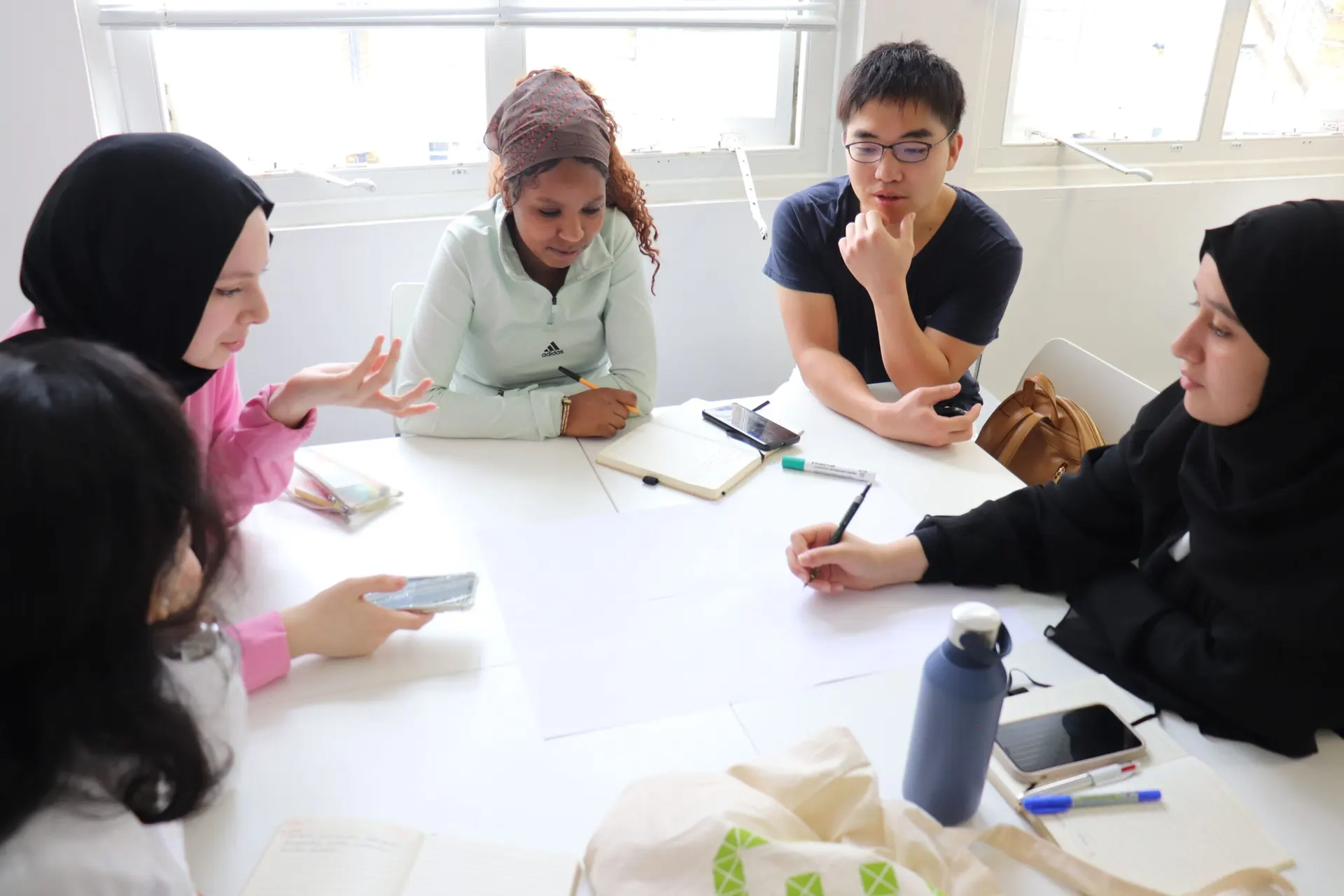
This is where our own work fits. Our online mentoring programme runs from October to March, which lines up closely with the UCAS and scholarship planning stages described above. Since 2022 we have supported 32 students through more than 250 hours of volunteer mentoring, in weekly one-to-one or small-group sessions covering STEM, IT and English, as well as CVs, personal statements, university applications and mock interviews. Mentoring starts again in October 2026.
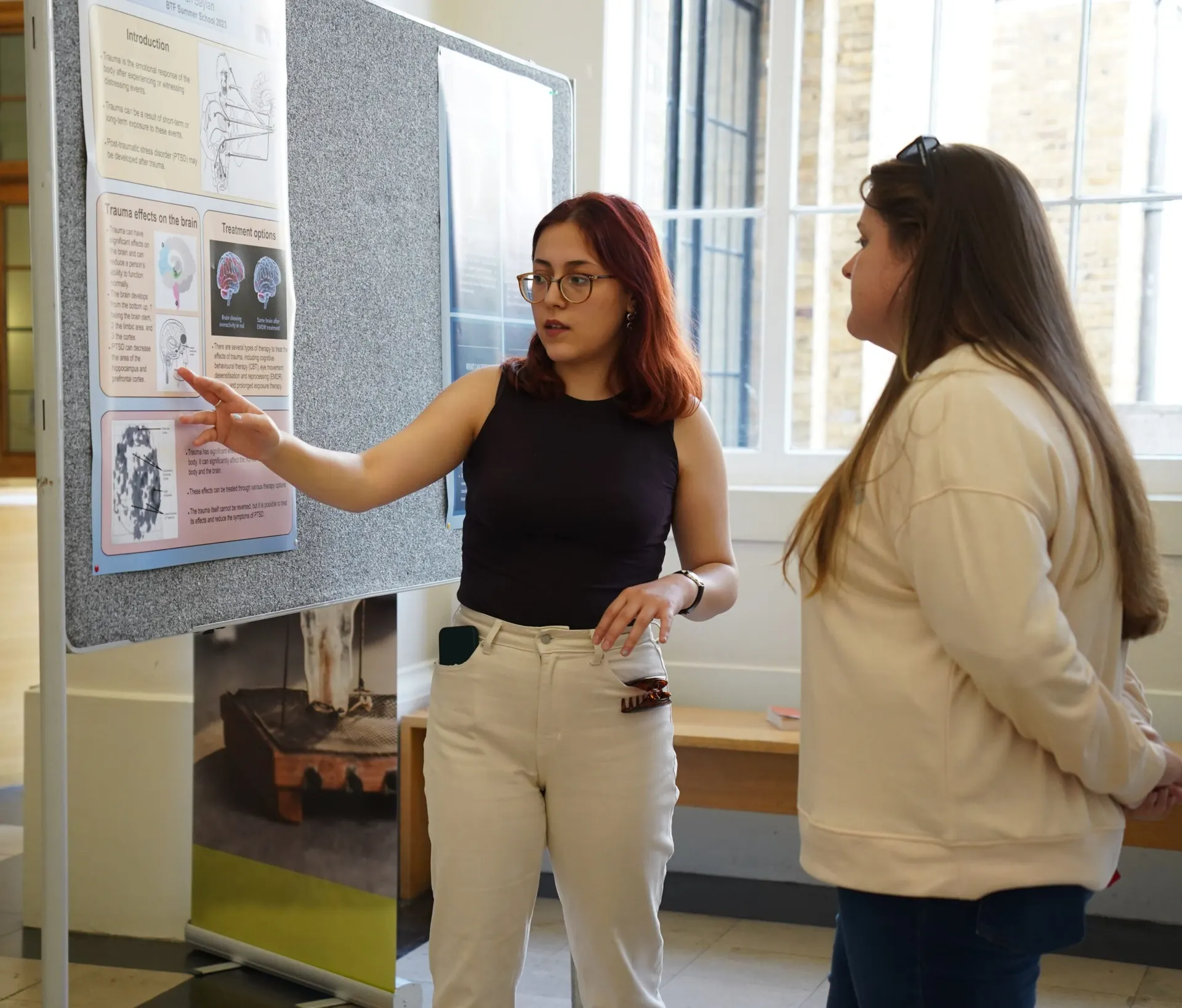
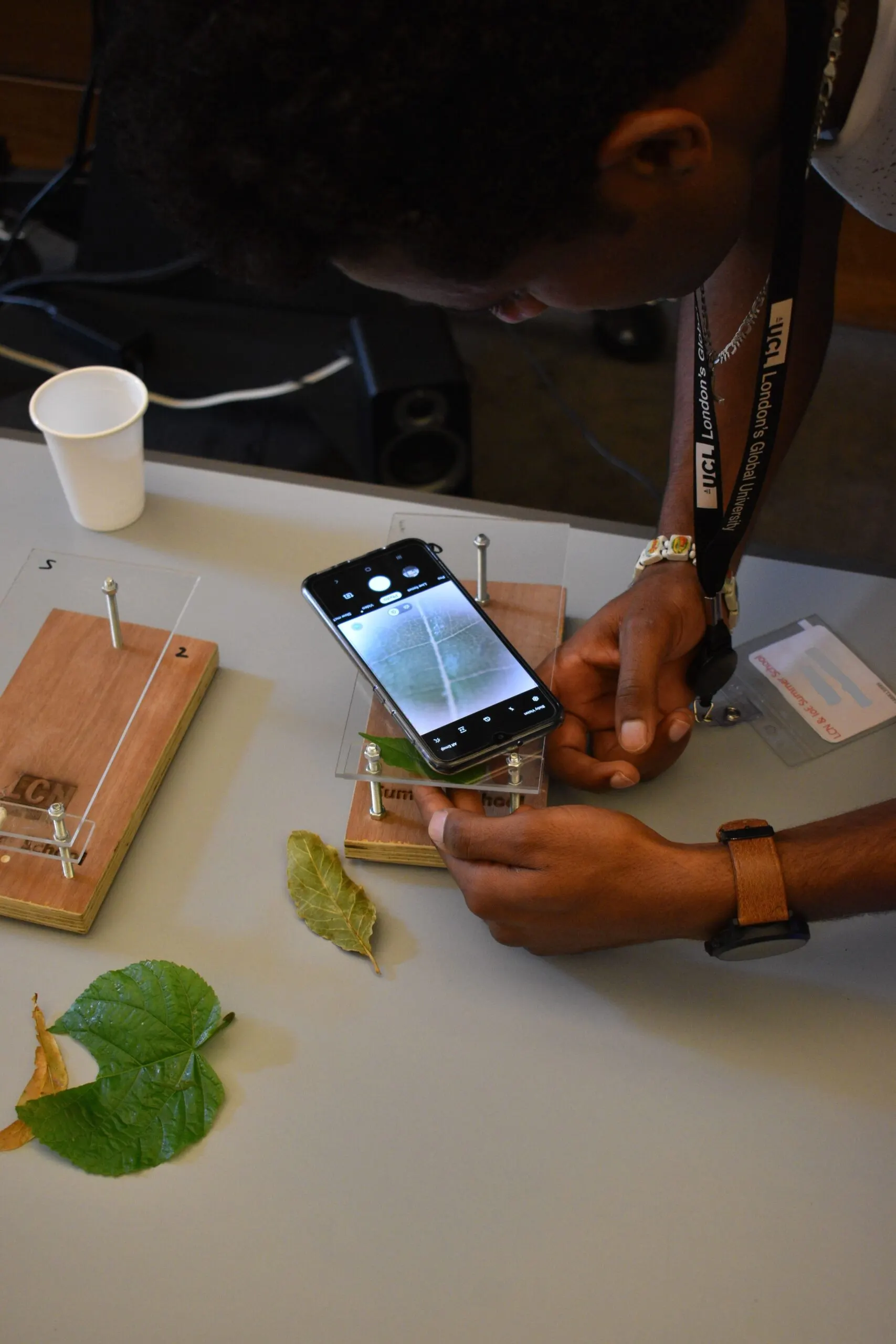
Our free two-week STEM and English summer school at UCL gives students aged 16 to 22 a fortnight inside a university and the kind of experience that strengthens a scholarship answer about why a subject matters to them. Demand is high: in 2025 we received 315 applications for 30 places. Summer School 2027 applications will be announced on our application page.
In short: there are many sanctuary scholarship schemes and few places in each, so the strategy is breadth and timing. Find several schemes a student is genuinely eligible for, get university applications in by the UCAS deadline, prepare answers and documents before the forms open in spring, and keep one trusted adult holding the calendar. If an award does not come this year, defer if possible, strengthen the application, and try again.
Figures compiled in September 2026 from the sources listed below. Scheme details are for 2026/27 entry unless stated, and rules and figures change. If you spot something out of date, please tell us.
Keep reading
- Home fees and student finance for refugees and asylum seekers — how fee status is decided, and who can get a loan.
- From 1% to 15% — refugees in higher education, and the global 15by30 target.
- Access to HE Diplomas and foundation years — the routes into a degree without UK qualifications.
- A practical guide to supporting a young refugee into education — for the adults in the room.
Frequently asked questions
What is a sanctuary scholarship?
A sanctuary scholarship is funding offered by a UK university to students who have sought asylum and cannot access government student finance because of their immigration status. Most combine a full tuition fee waiver with a yearly payment towards living costs. Names vary, including Sanctuary Scholarship, Asylum Seeker Scholarship and Access Opportunity Scholarship, and every university sets its own rules, number of awards and deadline.
Can asylum seekers get a scholarship to study at a UK university?
Yes. People whose asylum claim is still pending are the main group most sanctuary scholarships are designed for, because UCAS explains they are usually charged overseas fees and their access to student finance is restricted. STAR says over 80 universities offer some form of scholarship, bursary or fee waiver. Check each scheme carefully, as some also require a particular fee status, offer type or reference.
Can refugees apply for sanctuary scholarships?
Sometimes. People with refugee status or humanitarian protection can usually get home fees and student finance, so some schemes, such as Warwick's undergraduate scheme, exclude them. Others offer refugees a smaller award: Glasgow gives eligible refugees with funding a £5,000 yearly stipend, and Reading offered £5,000 a year to undergraduates with refugee status for 2026 entry. Read each university's eligibility list.
When are sanctuary scholarship deadlines?
For 2026/27 entry, the deadlines we checked ran from 20 April 2026 (Bath) to 3 July 2026 (SOAS), with UCL and Warwick on 18 May and Sheffield on 29 June. But most schemes need a university application or offer first, so the UCAS deadline in January is the one that really matters. For 2027 entry, that is 13 January 2027.
Does a sanctuary scholarship cover accommodation?
Usually not. Glasgow states that university accommodation is not included in its 2026/27 award, and most other schemes we checked do not list accommodation among what they pay for. Bath is an exception, covering tuition fees, accommodation costs and a bursary of up to £7,500, and Warwick offers scholars 52-week university-managed accommodation, although it charges for the room. Always check what the living-cost payment is expected to pay for.
Where can I find a list of sanctuary scholarships?
Start with STAR's list of scholarships provided by universities and the Displaced Student Opportunities UK portal, which UCAS also recommends. The Universities of Sanctuary network publishes a list of universities holding the award, which is a useful place to look for schemes. Then check each university's own funding page, as that is the only source of confirmed details.
Will a sanctuary scholarship affect my asylum support?
It might. King’s College London warns that its scholarship stipend may affect Home Office asylum support or legal aid, and the University of Bath advises award holders to seek professional advice about how a scholarship could affect their asylum support. Speak to your legal representative or an adviser, such as Refugee Education UK, before accepting an award.
Sources & further reading
Every third-party figure quoted above links back to its primary source. Where a statistic is our own, it comes from our programme records.
- Scholarships Provided by Universities, Student Action for Refugees (STAR) (2026)
- Awarded Universities of Sanctuary, City of Sanctuary UK (2026)
- Article 26 Project and Resources, Universities of Sanctuary
- Displaced students, UCAS (2026)
- 2027 entry deadline for all undergraduate courses, except those with a 15 October deadline, UCAS
- Access to university and higher education, Refugee Education UK
- DAFI Annual Report 2024, UNHCR
- UCL Access Opportunity Scholarship, University College London (2026)
- Warwick Undergraduate Sanctuary Scholarships, University of Warwick (2026)
- Asylum Seeker Scholarship, University of Edinburgh (2026)
- Sanctuary Scholarships, University of Glasgow (2026)
- Sanctuary Scholarships, University of Sheffield (2026)
- Sanctuary Scholarships, University of Reading (2026)
- Undergraduate Sanctuary Scholarship, University of Bath (2026)
Spotted something out of date, or have a figure we should include? Write to contact@bridgingthefuture.org and we will correct it.