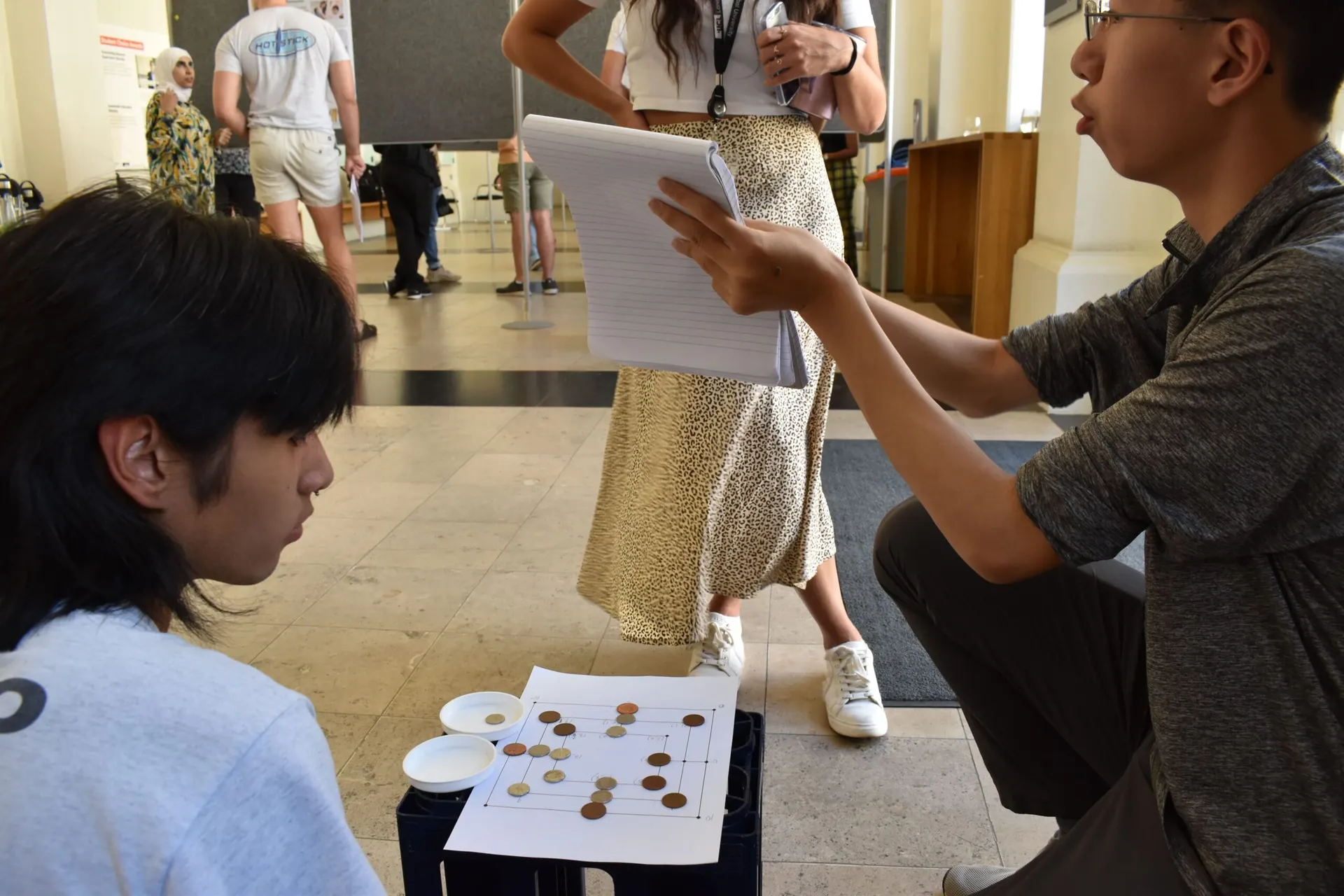
Key takeaways
- Three questions shape almost every education plan for a young refugee: their exact age, their immigration status, and what schooling they have and can evidence — ask all three in the first conversation.
- For 2027 entry, UCAS applications to Oxford, Cambridge and most medicine, dentistry and veterinary courses must arrive by 18:00 on 15 October 2026, and most other courses by 18:00 on 13 January 2027.
- In England, refugees and people with humanitarian protection are usually eligible for home fees and student finance, while people still seeking asylum are usually charged overseas fees and cannot get a tuition fee loan.
- In the year ending June 2026, 4,275 unaccompanied asylum-seeking children claimed asylum in the UK and 83% of them were aged 16 or 17 — the age at which the duty to stay in education or training until 18 applies.
- Care leavers in England can get a £2,000 higher education bursary from their council, and from 2026/27 their Maintenance Loan is no longer assessed on household income.
Supporting a young refugee into education comes down to three things: find out their exact age, their immigration status and what schooling they can evidence; get them enrolled somewhere quickly; and name specific routes and deadlines early enough for them to matter. You do not need to be an education specialist to do any of that.
Most of the young people who reach our programmes were sent by an adult. Not by a marketing campaign, not by a search engine — by a social worker, a college tutor, a foster carer or a volunteer at a drop-in who happened to know we existed. That is the honest mechanism of access in this sector, and it puts a particular kind of responsibility on the professionals around a young person.
This guide is written for the adult in the room, not for the student. It covers the three questions, the rules that apply at each age, the deadlines for 2026/27 and 2027 entry, a year-by-year plan, the routes that exist, what tends to go wrong, and who to contact when you need a better answer than we can give. It is also the hub for our more detailed guides, which are linked at the point they become relevant.
- Unaccompanied children claimed asylum in the UK
- 4,275Unaccompanied children claimed asylum in the UKYear ending June 2026 — 5% of all asylum claims
- Of those children were aged 16 or 17
- 83%Of those children were aged 16 or 17The age at which college, not school, is usually the next step
- Grant rate for unaccompanied children at initial decision
- 57%Grant rate for unaccompanied children at initial decisionYear ending June 2026, against 37% for other claims
Source: Home Office, Immigration system statistics, year ending June 2026
Start with three questions
Everything downstream depends on the answers to these, and they are worth establishing in the first conversation rather than the fifth.
1. How old are they, exactly?
Not “school age” — the actual date of birth, and whether it is disputed. Age determines which duties apply, which institutions will take them, which funding rules are used and how much time is left before the easier routes close.
If the age is disputed, that dispute will shape everything else, including whether a young person is placed in a school or a college. The Refugee Council runs an age dispute service for young people who believe they have been given the wrong age by the Home Office or a local authority. Our guide to the education rights of unaccompanied asylum-seeking children covers age assessment and its consequences in more detail.
2. What is their immigration status, and is it settled?
You do not need to advise on this — you should not — but you need to know it, because it determines whether higher education is financially possible.
Broadly, in England: someone with refugee status or humanitarian protection is usually eligible for home fee status and student finance. Someone whose asylum claim is still pending is usually treated as an overseas student and cannot get a tuition fee loan. UCAS’s guidance for displaced students sets out the same split, and notes that some universities choose to charge home fees to people seeking asylum. With the maximum full-time tuition fee at £9,790 in 2026/27 and rising to £10,050 in 2027/28, that distinction is worth tens of thousands of pounds over a degree, and it is not visible from the outside.
One recent change matters here. For asylum claims made on or after 2 March 2026, adults and accompanied children who are granted refugee status or humanitarian protection now receive an initial 30 months’ permission to stay rather than five years. Unaccompanied children continue to receive five years, according to the Home Office’s caseworker guidance. A three-year degree can now outlast a grant of status, so renewal dates belong in the education plan. Student Finance England’s 2026/27 information note says the regulations were amended so that a student who applies for further leave in line with the Immigration Rules keeps their eligibility unless the Home Office refuses that leave.
3. What schooling do they already have — and can any of it be evidenced?
Ask what they studied, to what level, in what language, and whether anything is documented. Then ask whether documents can realistically be obtained — and whether trying to obtain them would be safe.
If the answer is no — which it often is — that is not the end of the conversation. It shifts the route from “apply with qualifications” to “apply through a foundation or preparatory year”, which exists precisely for this situation. Where documents do exist, UK ENIC offers a Statement of Comparability that compares international qualifications with the UK system. Our guide to getting overseas qualifications recognised, including when documents are missing explains the options. Knowing which situation you are in early saves a year.
What the rules say at each age
The rules differ sharply either side of 16 and again at 18 and 19. This is the short version for England; Scotland, Wales and Northern Ireland have their own systems.
Under 16: a school place, quickly
A child of compulsory school age who arrives mid-year applies for a school place through the in-year admissions process. Under the School Admissions Code, the 2021 edition still in force at the time of writing, parents or carers making an in-year application should hear the outcome within 10 school days and must be told in writing within 15. Where a child is struggling to secure a place, the local Fair Access Protocol can be used — refugees and asylum seekers are among the groups the code lists — and once it has been agreed that a child will be considered under the protocol, a place must be allocated within 20 school days. If a young person is out of school for longer than that, ask why, in writing.
For a child in care, including an unaccompanied child, the statutory guidance on unaccompanied migrant children says the care plan must include a personal education plan, and that the Virtual School Head should monitor educational progress. That makes the Virtual School the right place to escalate.
16 to 18: the participation duty
In England, a young person who has left school must, until their 18th birthday, stay in full-time education, start an apprenticeship, or work or volunteer for 20 hours or more a week while in part-time education or training. Local authorities have a duty to promote that participation and to track 16 and 17 year olds who are not taking part. The DfE’s participation guidance also describes the September Guarantee: every young person reaching 16 or 17 in an academic year is entitled to an offer of a suitable place, by the end of September, to continue in education or training the following year.
Immigration status is less of a barrier here than people assume. UKCISA’s summary of the further education funding rules lists asylum seekers, people in local authority care, refugees and people with humanitarian protection among those eligible for funded courses at 16 to 18. Our guide to ESOL for 16 to 19 year olds covers how college language provision is organised.
Money for the costs of studying comes from the 16 to 19 Bursary Fund. The 2026/27 guide sets out a bursary of up to £1,200 a year for defined vulnerable groups, which include young people in care and care leavers. Unaccompanied asylum-seeking children are treated as looked-after children and can qualify under the “in care” category if they are in financial need. For accompanied young people seeking asylum, the guide says colleges can provide in-kind help such as books, equipment or a travel pass, but not cash.
18 and over: fewer duties, more deadlines
The participation duty ends at 18. From here, everything is voluntary, self-directed and harder to access — which is exactly why the years before 18 matter so much.
For care leavers, the local council’s duties continue. According to GOV.UK’s guidance on leaving care, a former relevant child is entitled to a personal adviser until 21, or until 25 if they ask, and a pathway plan that includes education. Care leavers going on to higher education can get a £2,000 bursary from their council. From 2026/27, Student Finance England no longer uses household income to calculate a care leaver’s Maintenance Loan, so eligible care leavers can borrow the maximum.
From 19, the main Level 3 route for people without A-levels is usually the Access to HE Diploma. Learners aged 19 or over may be able to use an Advanced Learner Loan, and Student Finance England writes off the Access to HE balance once the learner completes a higher education course — but that loan has its own residency rules, so check eligibility first.
| Age | Main duty or entitlement | Money to check | Who holds the duty |
|---|---|---|---|
| Under 16 | A school place; in-year decisions in writing within 15 school days | Ask the school and council what help with costs is available | Local authority and admission authorities |
| 16–17 | Participate in education or training until 18; September Guarantee offer | 16 to 19 Bursary Fund, including up to £1,200 for vulnerable groups | The young person, supported by the local authority |
| 18 | No participation duty; care leaver support continues | Bursary can continue for a course started at 16–18 | Leaving care service, for care leavers |
| 19 and over | No statutory education duty | Advanced Learner Loan, student finance or a sanctuary scholarship, depending on status | The young person and the institution |
| Care leavers to 25 | Personal adviser and pathway plan on request | £2,000 higher education bursary; Maintenance Loan without household income test from 2026/27 | Local authority |
The twelve-month sequence for 2026/27
This is the shape of a realistic year for a 16 to 18 year old aiming at further or higher education, assuming a September start. The dates in it are for applications made during 2026/27, for courses starting in autumn 2027.
| Month | What to do | Why now |
|---|---|---|
| Sep 2026 | Establish the three answers above. Get them into an institution, even an imperfect one | Being enrolled somewhere creates a tutor, a reference and a routine |
| Oct 2026 | Apply for a mentoring scheme; look for access programmes. Oxbridge, medicine, dentistry and veterinary UCAS deadline: 18:00, 15 October | Mentoring schemes often start in October; ours runs October to March |
| Nov–Dec 2026 | Identify the qualification gap: English, maths, subject content. Ask the fee status question in writing | Some colleges have a January intake; fee status answers take time |
| Jan 2027 | UCAS equal consideration date for most courses: 18:00, 13 January | A reference must be completed before an application can be sent |
| Feb–Mar 2027 | Research foundation years, sanctuary scholarships and Access to HE courses. UCAS Extra opens 25 February | Many scholarship windows open in spring; check each university’s dates |
| Apr–Jun 2027 | Apply for scholarships; start a personal statement for the next cycle if not applying this year | UCL lists Bowman Scholarship entrance tests for 14–18 June 2027; UCAS sends applications received by 30 June to universities |
| Jul 2027 | Check summer programme dates; Clearing opens 2 July | Summer School 2027 dates will be announced on our application page |
| Aug 2027 | Attend a summer programme; use it for references and evidence | An intensive fortnight produces exactly the material an application needs |
| Sep 2027 | Start the course, or begin the 2028 application | UCAS’s final date for 2027 entry applications is 23 September 2027 |
The UCAS dates above come from UCAS’s dates and deadlines page, and the Bowman details from UCL’s scholarship page. Both are the kind of detail that changes from cycle to cycle, so check them again before relying on them.
The sequence is deliberately front-loaded. The single most common failure we see is a young person who arrives at July with the right ambition, no qualifications route, no reference, and no time.
Where young people find out about free programmes
Approximate referral routes into our summer school
- Social worker or personal adviser35%
- College or school tutor25%
- Refugee support organisation20%
- Friend or previous participant15%
- Found us directly online5%
Show the data as a table
| Category | Value |
|---|---|
| Social worker or personal adviser | 35% |
| College or school tutor | 25% |
| Refugee support organisation | 20% |
| Friend or previous participant | 15% |
| Found us directly online | 5% |
On those indicative figures, roughly one applicant in twenty finds us unaided. That is the entire argument for writing this guide.
A year-by-year plan, from arrival to a degree
The twelve-month table assumes a young person is already on track. Many are not, and a realistic plan from arrival at 15 or 16 to a first degree often takes four or five years. This is the shape of that longer plan, with the detailed guide for each stage.
| Stage | Typical age | Priority | Rules and money to check | Read next |
|---|---|---|---|---|
| First term after arrival | Any | A school or college place; age resolved; English assessed; personal education plan if looked after | In-year admissions timescales; Virtual School involvement | Education rights of unaccompanied children |
| Year 1 at college | 16–17 | ESOL with a clear progression route, alongside GCSE maths and, when ready, English | 16 to 19 Bursary Fund; free travel or in-kind help | ESOL for 16 to 19 year olds |
| Year 2 at college | 17–18 | GCSEs completed; start Level 3 or plan a foundation year; join a mentoring scheme | Fee status question asked in writing; qualification evidence gathered | Overseas qualifications recognition |
| Application year | 18–19 | UCAS application by 13 January; scholarship applications in spring | Student finance eligibility; care leaver bursary; status renewal dates | Home fees and student finance |
| Bridging year, if needed | 19+ | Access to HE Diploma or a university foundation year | Advanced Learner Loan or scholarship; foundation year fee loan if eligible | Access to HE and foundation years |
| First year of a degree | 19–21 | Settling in; keeping the support network in place | Maintenance Loan; university hardship funds; digital access | Sanctuary scholarships in the UK |
Two things run alongside every row. The first is wellbeing: a young person carrying trauma, uncertainty about their status or family news will not learn on a neat timetable, and our guide to trauma-informed teaching for refugee students explains what that means in practice. The second is access to a device and data. Online applications, remote mentoring and college portals all assume a laptop and a connection that many young people seeking asylum do not have — our guide to digital exclusion and asylum support covers what can be done.
Which routes into education exist?
You do not need to know these in detail. You need to know they exist, so you can name them.
Further education college, with ESOL
The default landing place for a 16 to 18 year old. Useful, and the danger is that it becomes terminal: an ESOL course that leads to another ESOL course. Ask the college directly what the progression route is from the course they are proposing, and what qualification the student will hold at the end.
GCSE English and maths as a post-16 student
Colleges run these for students who arrive without them. They are the gate on most Level 3 routes and on many apprenticeships. If a young person has neither, getting them is often the highest-value single year available. Our analysis of the GCSE vacuum explains why so many displaced 16 year olds fall through this gap.
Access to HE Diploma
A Level 3 qualification designed for adults without traditional qualifications and accepted by many universities for degree entry. It is usually taken by people aged 19 and over. QAA’s Access to HE website has a search for approved courses.
Foundation year or preparatory certificate
A university-taught year that substitutes for missing school qualifications and leads towards a degree. UCL’s Undergraduate Preparatory Certificates are the ones we know best: UCL’s international foundation year. Associated with it is the Bowman Scholarship, which each year supports two UK-based students from forced-migration backgrounds who are in financial need and do not have the qualifications to enter a UCL undergraduate degree directly. It covers the full UPC course fee and includes a campus pack worth around £2,500 for study-related costs, as well as support with UCAS and sanctuary scholarship applications. Applicants must be able to live in the Greater London area and show how they will cover their own living and any accommodation costs, so read the eligibility criteria carefully.
This route solves several problems at once — qualifications, academic English, and being inside the institution early — and it is the route most often missed because nobody names it. Many other universities offer foundation years too; our guide to Access to HE and foundation years compares them.
Sanctuary scholarships
Many UK universities offer packages for people from forced-migration backgrounds, typically combining a fee waiver with a bursary and sometimes accommodation. The Universities of Sanctuary network and STAR’s access to university resources are practical starting points, and our guide to sanctuary scholarships in the UK explains how they work. Deadlines and eligibility differ by institution, which is precisely the kind of admin a supporting adult can carry and a student, alone, usually cannot.
Access and bridging programmes
Short programmes — summer schools, Saturday clubs, taster days, mentoring — that confer no qualification but change what a young person believes is possible, and generate references and evidence. Ours are among these; there are others, and a young person can do more than one.
What each route gives a young person
A judgement out of 5, based on what we see in applications
- Foundation / preparatory year5 / 5
Qualification, academic English, institutional belonging
- GCSE English and maths4 / 5
Opens Level 3 and apprenticeship routes
- Access to HE Diploma4 / 5
A recognised Level 3 for adults
- Sanctuary scholarship4 / 5
Solves money; assumes qualifications already held
- Summer or access programme3 / 5
Confidence, references, evidence — no qualification
- ESOL alone1 / 5
Necessary, rarely sufficient
Show the data as a table
| Category | Value |
|---|---|
| Foundation / preparatory year | 5 / 5 |
| GCSE English and maths | 4 / 5 |
| Access to HE Diploma | 4 / 5 |
| Sanctuary scholarship | 4 / 5 |
| Summer or access programme | 3 / 5 |
| ESOL alone | 1 / 5 |
How to talk about education with a young person
Small conversational choices matter more than they should.
Ask about the subject, not the journey. A young person is asked to narrate their displacement repeatedly, by people with the power to decide things about them. Asking what they like studying is often the first conversation in months that is about their future rather than their past.
Do not promise outcomes. “You’ll definitely get in” is not kindness. “This route exists and here is how it works” is.
Name the thing precisely. “There are courses you could do” is unusable. “There is a thing called a foundation year, at universities, for people without A-levels — shall we look at two of them together?” is actionable.
Assume ability, check vocabulary. Our mentors report this constantly: a student who cannot yet parse an exam question is not a student who cannot do the physics.
My student was very bright and had that ‘science-spark’ but struggled with English and communicating their ideas. Chapman, PhD student at UCL and BTF mentor
Three conversations worth having early
“What did you like studying, before?” Not what they studied — what they liked. It changes the register of the conversation from assessment to interest, and it produces information you cannot get any other way. A student who lights up about mathematics is telling you which route to research; a student who mentions a science competition back home is telling you they have a track record that no UK document will show.
“Here are two specific things — shall we look at them together?” Generic encouragement is close to useless. Doing the looking together models how to find things out, removes the fear of a form, and means the young person leaves knowing the name of the thing, which is what lets them ask someone else about it later.
“What is the plan for August?” Summer is when access programmes run and when unsupported young people disappear. A question asked in May about August is a question that can still be answered. The same question in late July usually cannot.
A note on tone
Do not require gratitude. A young person navigating this system is doing something difficult under conditions nobody would choose. They do not owe anyone enthusiasm for it.
Do not treat inconsistency as disinterest. Missed appointments are very often about housing moves, asylum interviews, family news, work and mental health rather than motivation. Our mentors converge on the same conclusion:
Sometimes anticipated timelines completely change, and it’s important the mentee is offered support navigating these changes with minimal disruption. Fern, PhD student at UCL and CERN, and BTF mentor
Respect a “not yet”. Some young people do not want to study, and that is a legitimate position for someone who has had very little control over anything for a long time. The useful contribution is making sure the door is described and left open, rather than pushing them through it.
What tends to go wrong
Six failure modes we see repeatedly, offered so they can be anticipated.
The ESOL loop. A student completes one ESOL level, then the next, then the next. Each course is well taught and none of them leads to a qualification anyone gates on. The break-out is GCSE English and maths, or a foundation year. Ask the college directly: what qualification will they hold at the end of this, and what does it let them do next?
The fee-status surprise. A student applies, is offered a place, and discovers in the summer that they are classified as an overseas student and there is no loan. Ask the question in November. In writing.
The status renewal nobody planned for. With 30-month grants now normal for adults who claimed asylum from March 2026, a renewal can fall in the middle of a course. Put the expiry date in the education plan and make sure legal advice is arranged well before it.
The missing consent form. Applications to programmes for under-18s routinely arrive with the student’s half completed and the guardian’s half missing. If you are the responsible adult, that form is your part of the job.
The reference nobody wrote. A tutor’s reference carries disproportionate weight for a young person with a short UK education history, and UCAS will not send an application until the reference is complete. Ask in the autumn, not the week before 13 January.
The plan that lives in one adult’s head. Social workers change. Tutors change. If the education plan exists only in a conversation, it evaporates. Write it down and give the young person a copy — it is theirs, and it is the one thing that survives a change of caseworker.
Grant rates at initial asylum decision
Proportion of initial decisions resulting in protection or other leave, main applicants
- Unaccompanied children, YE June 202657%
- All other claims, YE June 202637%
- All claims, YE June 202638%
- All claims, YE June 202548%
Show the data as a table
| Category | Value |
|---|---|
| Unaccompanied children, YE June 2026 | 57% |
| All other claims, YE June 2026 | 37% |
| All claims, YE June 2026 | 38% |
| All claims, YE June 2025 | 48% |
Advice by role, and a checklist
The core of the job is the same for everyone. The additions depend on where you sit.
If you are a foster carer or a family member
Consent forms are the most common reason an application fails. Our summer school requires two forms — a student application and a parent, guardian or social worker consent form — and an application is only complete once both have been submitted. If you are the responsible adult, the consent form is your part, and it is time-critical.
The August question is a real one. Our summer school days run 10:00 to 16:30 across two weeks in August in central London, which is a substantial commitment for a household. Travel within TfL Zones 1–6, food and learning materials are covered — but knowing that in advance is what makes it usable.
If you work in a college or a school
Tell students that free programmes exist. A single sentence in a tutorial reaches more young people than any campaign we could run.
Distinguish academic English from general ESOL in your provision. A student who completes ESOL and cannot read a physics question has been served the wrong subject. This is a funding problem before it is a teaching one, but the distinction can be made inside a course.
Write the reference early, and check bursary eligibility. An unaccompanied student in care may qualify for the vulnerable-groups bursary; an accompanied student seeking asylum may be able to receive in-kind support. Both are easy to miss.
If you are a social worker or personal adviser
Put education dates in the pathway plan. UCAS deadlines, scholarship windows and status renewal dates belong in the same document as housing and health, reviewed at least every six months.
Use the Virtual School. For a looked-after child without a school place or with a stalled personal education plan, the Virtual School Head is the senior person responsible for their educational progress.
A practical checklist
| Done | Item | Notes |
|---|---|---|
| ☐ | Date of birth recorded and, if disputed, being resolved | Determines every duty and deadline |
| ☐ | Immigration status known, grant length and expiry date noted | 30-month grants for adults who claimed from 2 March 2026 |
| ☐ | Fee status implications checked in writing | GOV.UK and UKCISA first, then the institution |
| ☐ | Enrolled somewhere — school, college or training | Creates a tutor, a reference and a routine |
| ☐ | English level assessed; academic and conversational English distinguished | The gap that stops most science applications |
| ☐ | GCSE English and maths status established | The gate on most Level 3 routes |
| ☐ | Prior qualifications listed; evidence attempts documented | UK ENIC if documents exist; a foundation year if not |
| ☐ | Bursary eligibility checked | 16 to 19 Bursary Fund; £2,000 HE bursary for care leavers |
| ☐ | One named adult who holds the education plan, written down | The role this guide is really about |
| ☐ | Mentoring scheme applied for | Ours starts again in October 2026 |
| ☐ | UCAS deadline identified: 15 October 2026 or 13 January 2027 | Reference requested well before |
| ☐ | Two or three specific institutions and scholarships identified | Not “university” — named courses at named places |
| ☐ | Summer programme dates checked | Summer School 2027 dates will be announced on our application page |
What our programmes offer, and who they suit
Two things, both free, both aimed at 16 to 22 year olds from refugee, asylum-seeking and forced-migrant backgrounds, and both run by volunteers.
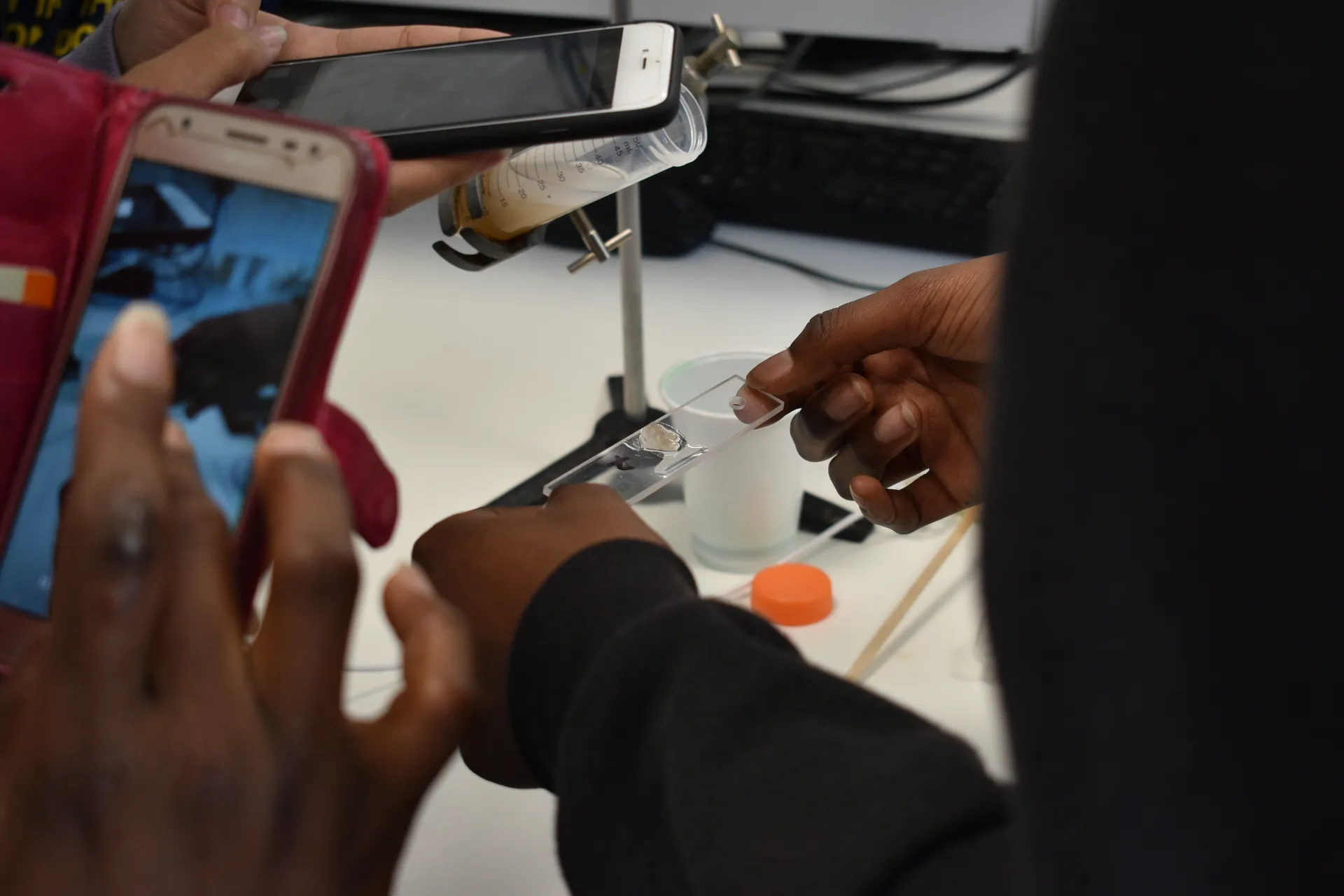
The summer school runs at the UCL Department of Physics & Astronomy across two weeks in August, combining English for science with practical STEM sessions. There are 30 places a year; in 2025 we received 315 applications for them. Travel within TfL Zones 1–6, food and all learning materials are covered. Summer School 2026 has finished, and Summer School 2027 dates will be announced on our application page. It suits a young person who needs evidence, confidence and a reference — and who would benefit from being inside a university building before they apply to one. Our piece on what happens inside a free STEM summer school describes the fortnight.
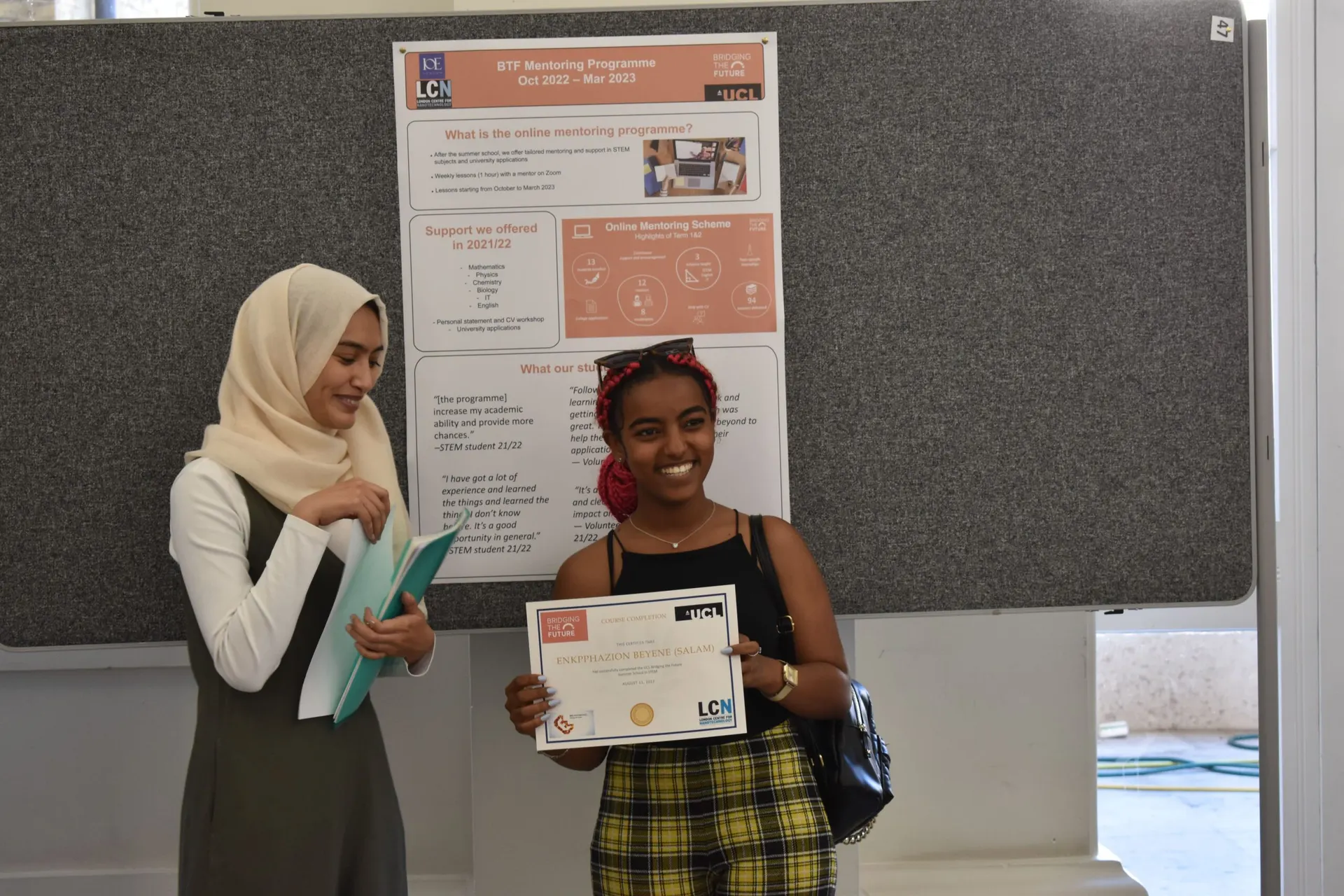
The online mentoring programme runs October to March and starts again in October 2026. It offers weekly one-to-one or small-group support in STEM, IT and English, plus help with CVs, personal statements, university applications and mock interviews. Since 2022 it has supported 32 students through more than 250 hours of volunteer mentoring. It suits a young person who is enrolled somewhere but has nobody to ask. Our article on what STEM mentoring actually involves explains the sessions, and we now also offer work placements and internships for our students.

Who to contact for specialist advice
We run programmes; we are not an advice service, and on immigration, fee status and casework there are organisations far better placed than we are. These are the ones we point people to most often.
| If you need help with… | Contact | What they offer |
|---|---|---|
| Education pathways for a young refugee or asylum seeker | Refugee Education UK | An education advice team for young people and those supporting them, via an online enquiry form |
| Age disputes and support for unaccompanied children | Refugee Council | Services for children and young people, including an age dispute service |
| Children’s legal rights, including immigration status and education | Coram Children’s Legal Centre | Free legal information, advice and representation for children and their families or carers, as UCAS’s displaced students guidance notes |
| Understanding home or overseas fee status | UKCISA | Explanations of the fee regulations and a student advice line |
| A student finance application or decision | Student Finance England | Applications, eligibility decisions and appeals |
| UCAS applications as a displaced student | UCAS displaced students guidance | Fee status, scholarships and application advice for refugees and people seeking asylum |
| Comparing overseas qualifications | UK ENIC | Statements of Comparability for international qualifications |
| Sanctuary scholarships | Universities of Sanctuary and STAR | A national network of university staff and students working on sanctuary in higher education; STAR’s Equal Access campaign and access to university resources |
| Care leavers going to college or university | Become — Propel | A searchable guide to what colleges and universities offer care-experienced students, plus advice and workshops |
| Finding an Access to HE course | Access to HE (QAA) | A search for approved Access to HE courses |
For a specific case, start with the organisation closest to the question. For anything touching immigration status, the young person needs a regulated immigration adviser or solicitor, not a well-meaning generalist — including us.
Compiled October 2025; updated September 2026 with UCAS dates for 2027 entry, 2026/27 funding rules, the March 2026 change to refugee permission to stay, and Home Office statistics for the year ending June 2026. This is general information, not immigration, legal or financial advice — please use the specialist organisations above for an individual case. Rules and figures change — if you spot something out of date, please tell us.
Keep reading
- Home fees and student finance for refugees and people seeking asylum — the fee status categories in detail.
- Education rights of unaccompanied asylum-seeking children — school places, care plans and age assessment.
- The GCSE vacuum — the structural reasons this guide is necessary.
- From 1% to 15% — the higher-education picture globally and in the UK.
Frequently asked questions
I am not an education professional. Am I the right person to help a young refugee into education?
Almost certainly. Nothing in this guide needs professional expertise: it needs knowing that routes exist, asking three questions early and being consistent over a year or more. Specialist questions about immigration, fee status and legal rights should go to specialist organisations such as Refugee Education UK, UKCISA or Coram Children’s Legal Centre. The continuity is the part only you can provide.
When are the UCAS deadlines for 2027 entry?
UCAS says completed applications for 2027 entry can be sent from 1 September 2026. The equal consideration date for Oxford, Cambridge and most medicine, dentistry and veterinary courses is 18:00 UK time on 15 October 2026. For most other undergraduate courses it is 18:00 UK time on 13 January 2027. Applications received by 30 June 2027 are sent to universities; after that they go into Clearing.
Can a young person who is seeking asylum go to college or university?
Yes to college: in England, 16 to 18 year olds seeking asylum are eligible for funded further education, according to UKCISA’s summary of the DfE funding rules. University is harder. People seeking asylum are usually classed as overseas students and cannot get a tuition fee loan, so many rely on sanctuary scholarships. Some universities charge home fees to people seeking asylum, so always ask the institution directly.
What education support do care leavers get in England?
Care leavers usually have a personal adviser and a pathway plan covering education. They may get up to £1,200 a year from the 16 to 19 Bursary Fund, a £2,000 higher education bursary from their local council, and from 2026/27 the maximum Maintenance Loan without a household income assessment. Former unaccompanied children who become care leavers can receive this support, though immigration status can affect some entitlements.
Can I refer a young person to Bridging the Future’s programmes?
Yes. Both programmes are free and open to 16 to 22 year olds from refugee, asylum-seeking and forced-migrant backgrounds. Online mentoring starts again in October 2026. Summer School 2027 dates and the deadline will be announced on our application page, or you can ask us a question if you are unsure whether someone fits.
Is there an age at which it is too late to start?
No, but the routes change. Under 18, the local authority has duties towards the young person and college is usually straightforward. From 19, the options are mainly Access to HE Diplomas, foundation years and sanctuary scholarships, and funding rules differ. Every one of these routes exists, and every one of them needs someone to name it early enough for a deadline to be met.
What if their English is not strong enough yet?
Then English for Speakers of Other Languages is the right first step, with one question attached: what does it lead to? Language provision and a qualifications plan are not alternatives. A young person usually needs both at once, for example ESOL alongside GCSE maths, so that by the end of the year they hold something a college, employer or university will accept.
Sources & further reading
Every third-party figure quoted above links back to its primary source. Where a statistic is our own, it comes from our programme records.
- Dates and deadlines for uni applications, UCAS (2026)
- Displaced students, UCAS
- Student finance for undergraduates: Eligibility, GOV.UK
- Student finance for undergraduates: New full-time students, GOV.UK (2026)
- England: FE fee status, UKCISA (2026)
- 16 to 19 Bursary Fund guide: 2026 to 2027, Department for Education (2026)
- Know when you can leave school, GOV.UK
- Participation of young people in education, employment or training, Department for Education (2024)
- Leaving foster or local authority care, GOV.UK
- School admissions code, Department for Education (2021)
- Care of unaccompanied migrant children and child victims of modern slavery, Department for Education (2017)
- How many people claim asylum in the UK? (year ending June 2026), Home Office (2026)
- How many people are granted asylum in the UK? (year ending June 2026), Home Office (2026)
- Bowman Scholarship, University College London
Spotted something out of date, or have a figure we should include? Write to contact@bridgingthefuture.org and we will correct it.